The global syntactic foam market was valued at USD 140.58 million in 2023 and is projected to reach USD 204.23 million by 2030, growing at a CAGR of 5.3% from 2024 to 2030. This growth can be attributed to the increasing demand for syntactic foam in ultra-deep-sea environments, owing to its exceptional properties such as high specific strength and low thermal expansion.
As onshore oil and gas reserves are depleting, major oil and gas companies are progressively investing more in offshore exploration and production (E&P) platform development. This trend, particularly in ultra-deep-water E&P activities, is expected to drive the demand for syntactic foam, which is essential for applications like pipe insulation and buoyancy modules.
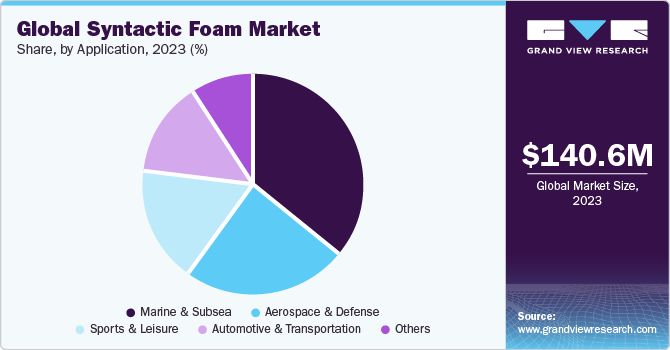
Syntactic foams are widely used in marine and subsea applications due to their buoyancy and low moisture absorption characteristics. They are used in the production of underwater vehicles, spacecraft, pipe insulation, boat hulls, and other marine-based structures. The subsea industry, in particular, offers significant opportunities for growth in the syntactic foam market.
However, one of the challenges faced by the market is the fluctuation in raw material prices. Syntactic foam is a composite material made by combining a polymer, ceramic, or metal matrix with preformed hollow glass or ceramic spheres. Variations in the costs of raw materials and the complexities involved in its synthesis can impact the overall cost of production, thereby restraining market growth.
Order a free sample PDF of the Syntactic Foam Market Intelligence Study, published by Grand View Research.
Key Market Trends & Insights
- North America led the syntactic foam market with the largest revenue share of 34.16% in 2023. The region is expected to continue its dominance due to the growing demand for high-performance, lightweight materials in industries such as aerospace and marine. The region’s strategic investments in offshore drilling and space exploration further bolster the demand for syntactic foam.
- By matrix, the polymer segment held the largest revenue share of 39.85% in 2023. The polymer matrix is widely adopted in marine and subsea applications due to its beneficial characteristics such as high abrasion resistance, wear resistance, low density, high strength, corrosion resistance, and excellent impact and fatigue resistance.
- By foam type, the block segment dominated the market with a significant revenue share of 51.85% in 2023. Block-shaped syntactic foams are extensively used in buoyancy modules, which are integral components of offshore drilling and marine infrastructure, making this segment a key driver of market growth.
- By application, the marine & subsea segment led the market with the largest revenue share of 36.38% in 2023. Syntactic foam is critical in marine and subsea applications due to its ability to withstand extremely high hydrostatic pressures and resist corrosion from seawater. This makes it ideal for use in underwater vehicles, pipelines, and other subsea structures.
Market Size & Forecast
- 2023 Market Size: USD 140.58 Million
- 2030 Projected Market Size: USD 204.23 Million
- CAGR (2024-2030): 5.3%
- North America: Largest market in 2023
- Europe: Fastest growing market
Key Companies & Market Share Insights
Key companies in the syntactic foam market are employing a variety of organic and inorganic growth strategies such as new product development, mergers & acquisitions, and joint ventures to expand their market share. These efforts are aimed at enhancing their product offerings, increasing operational capabilities, and maintaining a competitive edge in the rapidly growing syntactic foam market.
Key Players
- Trelleborg AB
- SynFoam
- Diab International AB
- Acoustic Polymers Limited
- Advanced Insulation
- Deepwater Buoyancy
- CMT Materials
- Acoustic Polymers Limited
- Engineered Syntactic Systems
- Balmoral Comtec Ltd
Explore Horizon Databook – The world's most expansive market intelligence platform developed by Grand View Research.
Conclusion
The global syntactic foam market is on a growth trajectory, driven by the increasing demand from the offshore oil and gas sector, particularly in ultra-deep-water exploration and production. North America will remain the largest market due to its strong demand from aerospace and marine industries, while Europe is expected to grow at the fastest rate. Despite challenges like raw material price fluctuations, the growing application of syntactic foam in marine and subsea industries presents significant opportunities for market expansion. As demand for high-performance, lightweight materials continues to rise, syntactic foam will play a pivotal role in the future of underwater and aerospace applications.

No comments:
Post a Comment