Pages

Showing posts with label Global Fertilizer Market. Show all posts

Tuesday, September 15, 2026

Global Fertilizer Markets Face New Supply Chain Pressures

As the bedrock of global food security, mineral fertilizers are vital to modern agricultural productivity, directly dictating crop yields and farm economics across the globe. However, because fertilizer manufacturing depends heavily on concentrated energy sources and key mineral deposits, the industry remains exceptionally susceptible to geopolitical disruptions. Recent tensions involving Iran—a crucial urea exporter and major regional energy provider—have severely hampered shipping lanes through the Strait of Hormuz, inflating marine insurance premiums and squeezing global nitrogen and raw material supplies. In contrast, the wider seaborne urea market strengthened as constrained Middle Eastern exports, higher European production costs and renewed importer activity tightened internationally available supply.

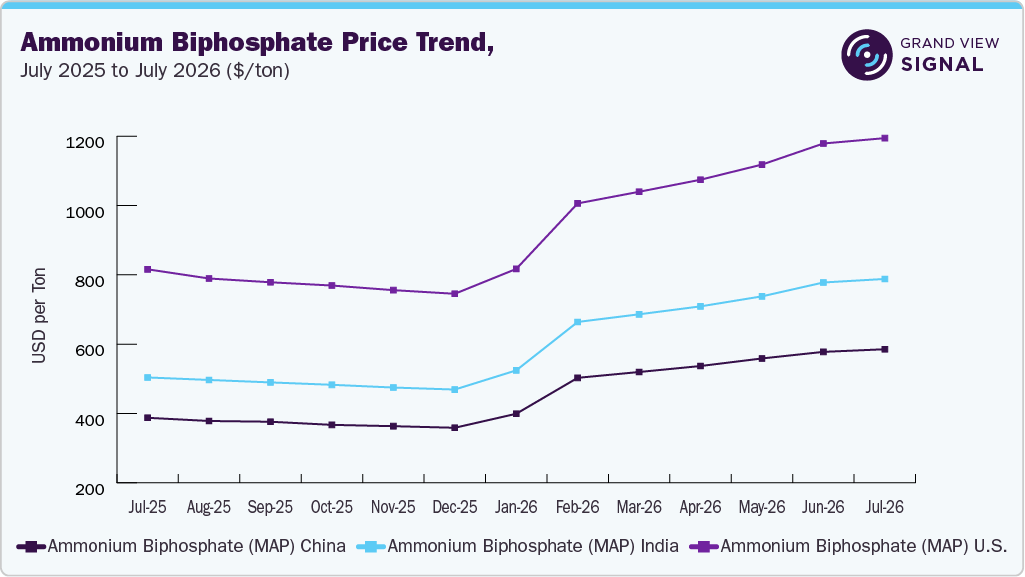
Against this turbulent macroeconomic background, specialty and high-analysis inputs have undergone swift strategic shifts. Notably, ammonium biphosphate MAP in the U.S. recorded an extraordinary 46.4% year-over-year growth as buyers aggressively secured concentrated, dependable phosphate supplies to buffer against unpredictable input pricing.

To handle these volatile commodity shifts, industry executives rely on Grand View Signal, a SaaS platform providing real-time pricing intelligence, trade flow monitoring, and predictive market analytics to refine global procurement and risk strategies.

China’s Quiet Market vs. Surging Global Prices

China’s domestic urea sector remained muted throughout July, with local production easily covering immediate spot requirements. Conversely, international nitrogen markets headed in the opposite direction, propelled by shrinking seaborne availability and escalating ocean freight charges.

This regional divergence holds major implications for global agriculture. Nitrogen represents the largest fertilizer category by volume globally, with just three primary crops driving over 50% of total consumption: corn/maize (20%), wheat (18%), and rice (16%). Because fertilizer historically claims a massive share of total crop input expenses—averaging 21% for corn and 19% for wheat—even minor fluctuations in delivered nitrogen costs directly alter farm profitability.

When seaborne replacement values escalate, import-reliant regions must absorb higher freight rates, increased insurance surcharges, and markups from alternative suppliers. For growers already facing unpredictable grain markets, these compounding input costs quickly shrink profit margins, making disciplined buying strategies vital for curbing supply chain risks.

Schedule a free demo of Grand View Signal to get real-time preview of price fluctuations in the Fertilizers Sector

How Shipping Bottlenecks and Energy Costs Impacted Middle Eastern Supply

The Middle East remains a vital exporter of urea, ammonia, and foundational fertilizer ingredients. Consequently, regional supply disruptions quickly affected global availability, contributing to a month-over-month decline of 1.4%.

  • Ammonia Export Limits: Reduced outbound shipments from the Middle East elevated international replacement costs across multiple nitrogen products.
  • Elevated Energy Costs: Spiking European natural gas prices pushed up the baseline manufacturing expense of nitrogen fertilizers across Western Europe.
  • Logistical Obstacles: UAE-based manufacturers faced shipping and logistics bottlenecks, though their geographically diversified operations helped prevent widespread contract cancellations.

In response to these conditions, global buyers adapted by broadening their supplier networks and building larger inventory cushions where financially feasible. Nitrogen and phosphate products felt these pressures most intensely, whereas potash remained largely insulated from natural gas price volatility.

Get historical, current, and forecast fertilizers price assessments. Request Free Access to Grand View Signal
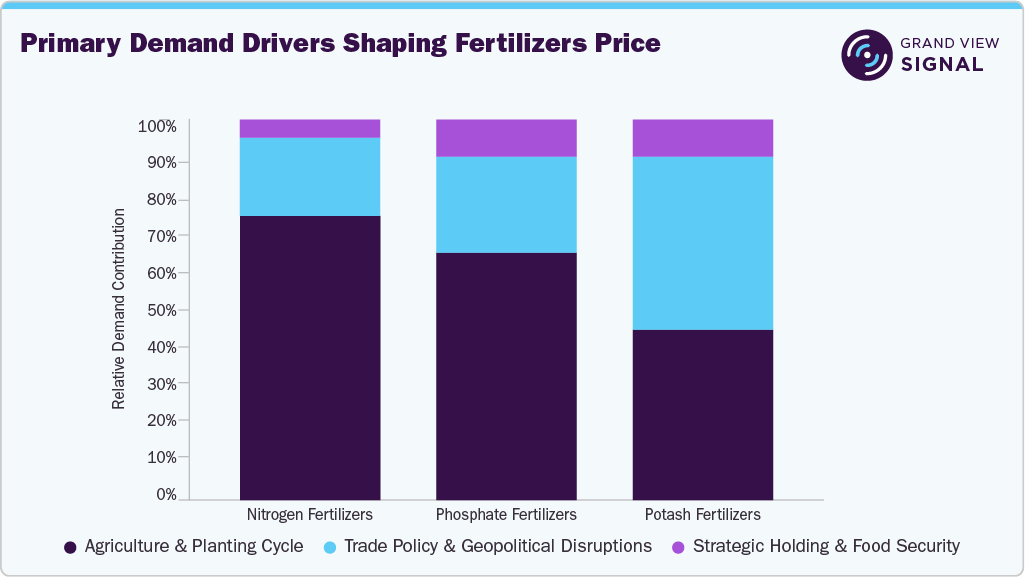
Primary Demand Drivers Shaping Fertilizers Price, July 2026

India’s Strategic Balance During the Kharif Season

India’s farming sector generated substantial demand in July driven by active Kharif crop planting. Farmers steadily applied urea, phosphate, and potash across major agricultural regions. To maintain local price stability and avoid panic buying, the Indian government closely managed its national reserves.

A combination of robust domestic production, international urea import tenders, structured monthly distribution, and existing long-term import contracts kept local supply comfortably ahead of agricultural demand. Government authorities actively tracked inter-state movement to reroute fertilizers wherever field applications peaked. Through this controlled inventory management, India supported steady global trade volumes without triggering sudden buying sprees that could have inflated international market prices.

Access commodity-wise monthly forecast datasets for the next 6 months. Request Free Access to Grand View Signal

Phosphate Supply Bottlenecks and Strategic Coalitions

Phosphate fertilizers remained vulnerable to raw material bottlenecks throughout July, particularly concerning sulfur, ammonia, phosphate rock, and phosphoric acid access. Disruptions along Middle Eastern transport routes heightened shipping risks and import costs for raw materials. Simultaneously, strict export limitations on Chinese phosphate restricted options for international buyers.

While monoammonium phosphate (MAP) prices within China held firm, this internal stability failed to mirror the higher replacement expenses borne by overseas buyers. Fertilizer producers featuring fully integrated phosphate rock assets maintained a distinct edge, particularly those capable of securing alternative sulfur and ammonia supply lines.

On a broader scale, Morocco expanded a major phosphate alliance in July to reinforce long-term global output capacity. Koch Ag & Energy Solutions alongside OCP Nutricrops finalized an agreement allowing Koch to buy a 50% stake in Jorf Fertilizers Company I (JFC I). This 50-50 joint venture in Morocco will fortify global supply chains while expanding phosphate fertilizer availability, especially for North American producers.

Get detailed driver impact analysis on Fertilizers Prices. Request Free Access to Grand View Signal

Why Potash Maintained Stability Despite Global Volatility

In contrast to the turbulent nitrogen sector, potash markets enjoyed a far calmer month. In India, muriate of potash (MOP) stockpiles comfortably surpassed seasonal requirements, recording a 7.6% year-over-year increase and eliminating any need for emergency spot purchases. China’s monitored potassium sector similarly reflected minimal price movement, verifying that supply was sufficient to satisfy current demand.

Agricultural buyers maintained deliberate timing on potash purchases based on crop economics, existing reserves, and scheduled field application windows. Meanwhile, specialized formulations such as sulfate of potash (SOP) and potassium nitrate followed smaller, targeted purchasing cycles tailored to high-value, chloride-sensitive crops. Although elevated freight charges increased delivered costs, healthy inventory levels and patient buying habits kept domestic potash prices steady through the month.

Make Better Commodity Decisions with Signal

Navigating shifting fertilizer costs, trade restrictions, and supply disruptions demands reliable market intelligence. Grand View Signal equips industry leaders with clarity across global agricultural inputs via tailored research and analytical tools.

Grand View Signal’s primary features include:

  • Real-Time Price Benchmarking: Detailed price tracking across major global fertilizer trading hubs to monitor replacement costs and market trends.
  • Global Trade Flow Tracking: Continuous monitoring of ocean freight rates, shipping vessel movements, and regional supply bottlenecks.
  • Custom Supply & Demand Analytics: Predictive forecasting tools for nitrogen, phosphate, and potash markets.
  • Policy and Export Tracking: Up-to-date analysis covering trade policies, government procurement tenders, and global export limits.
  • Strategic Advisory Services: Customized consulting support for manufacturers, traders, and institutional investors managing commodity exposure.

Read our latest articles on

Monday, August 31, 2026

Global Fertilizer Markets Navigate Geopolitical Risk and Supply Volatility

As the foundation of global food security, mineral fertilizers are indispensable to modern agricultural productivity, directly determining crop yields and farm economics worldwide. However, because fertilizer production relies heavily on concentrated energy sources and strategic mineral deposits, the sector remains uniquely vulnerable to geopolitical shocks. Recent conflict dynamics involving Iran, a critical exporter of urea and key regional energy supplier, have severely disrupted trade routes through the Strait of Hormuz, driving up shipping risk premiums and tightening global nitrogen and raw material availability.

Amid this turbulent macro backdrop, specialty and high-analysis products have seen rapid strategic realignments; most notably, ammonium biphosphate MAP in the U.S. has experienced a stunning growth of 46.4% over the past year, as buyers aggressively seek concentrated, reliable phosphate sources to hedge against volatile input costs.

To navigate these volatile commodity dynamics, leaders rely on Grand View Signal, a SaaS-based platform that delivers real-time pricing intelligence, trade flow tracking, and forward-looking market analytics to optimize global sourcing and risk management strategies.

Ammonium Biphosphate Price Trend, July 2025 to July 2026 ($/ton)

China’s Quiet Market vs. Rising Global Prices

China’s domestic urea market remained quiet throughout July, with local supplies proving more than adequate to meet immediate spot demand. However, international nitrogen markets moved in the opposite direction, driven by tightening seaborne availability and rising freight rates.

This regional disconnect carries significant weight for the global agricultural sector. Nitrogen is the single largest fertilizer consumed by mass globally, with just three staple crops accounting for over 50% of total demand: maize/corn (20%), wheat (18%), and rice (16%). As fertilizer historically represents a massive share of total crop input costs, averaging 21% for corn production and 19% for wheat, even modest shifts in landed nitrogen prices directly alter farm operating economics.

When international seaborne replacement costs rise, import-dependent regions are forced to absorb higher freight rates, elevated insurance premiums, and alternative sourcing markups. For growers already navigating volatile grain markets, these compounding input expenses quickly erode operating margins, making disciplined procurement strategies essential for mitigating supply chain exposure.

Schedule a free demo of Grand View Signal to get real-time preview of price fluctuations in the Fertilizers Sector

How Shipping Constraints and Energy Costs Affected Supply in Middle East

The Middle East remains a vital exporter of urea, ammonia, and essential fertilizer raw materials. As a result, supply-chain interruptions in the region quickly impacted global availability, and marked a month-on-month decline of 1.4%.

  • Ammonia Restrictions: Limited export shipments from the Middle East drove up international replacement costs across several nitrogen products.
  • Energy Costs: Rising European natural gas prices increased the underlying cost of producing nitrogen fertilizers in Western Europe.
  • Logistics Challenges: UAE-based producers encountered shipping and logistical constraints. However, their diversified manufacturing locations helped prevent major order cancellations.

Faced with these pressures, international buyers adjusted by diversifying their supplier bases and holding larger inventory buffers whenever financially possible. Nitrogen and phosphate products felt these pressures most directly, while potash remained largely shielded from natural gas cost spikes.

India’s Strategic Balance During Kharif Season

India’s agricultural sector created substantial demand in July due to ongoing Kharif crop cultivation. Farmers actively applied urea, phosphate, and potash across major agricultural belts. To keep local prices stable and prevent panic buying, the Indian government carefully managed its national inventory.

A combination of active domestic manufacturing, international urea procurement tenders, monthly distribution plans, and existing long-term import agreements kept local supply ahead of farmer demand. Government agencies actively monitored movement across states to redirect fertilizers wherever field activity peaked. By managing its national inventory so deliberately, India supported steady global trade volumes without creating sudden, aggressive buying sprees that could have driven international prices higher.

Get historical, current, and forecast fertilizers price assessments. Request Free Access to Grand View Signal

Phosphate Supply Constraints and Strategic Partnerships

Phosphate fertilizers remained vulnerable to raw material bottlenecks in July, particularly regarding access to sulfur, ammonia, phosphate rock, and phosphoric acid. Disruptions across Middle Eastern trade corridors raised shipping risks and landed costs for input materials. At the same time, tight export controls on Chinese phosphate limited options for global buyers.

Monoammonium phosphate (MAP) prices inside China remained steady, but this stability did not reflect the higher replacement costs faced by overseas importers. Fertilizer producers with fully integrated phosphate rock assets held a distinct advantage, especially those capable of securing alternative sulfur and ammonia streams.

On a strategic level, Morocco expanded a major phosphate partnership in July, strengthening long-term global production capacity. Koch Ag & Energy Solutions and OCP Nutricrops have signed an agreement for Koch to acquire a 50% stake in Jorf Fertilizers Company I (JFC I). The 50-50 joint venture in Morocco will strengthen global supply chains and enhance phosphate fertilizer availability, particularly for North American farmers.

Access commodity-wise monthly forecast datasets for the next 6 months. Request Free Access to Grand View Signal

Why Potash Remained Stable Despite Global Pressures

Unlike the volatile nitrogen sector, potash markets experienced a far more stable month. In India, muriate of potash (MOP) inventories comfortably exceeded seasonal requirement forecasts, by marking Y-O-Y growth of 7.6%, taking away any urgency for sudden spot-market imports. China’s monitored potassium market similarly saw minimal price movement, confirming that supply was sufficient to meet current demand.

Agricultural buyers continued to time their potash purchases based on crop profitability, existing inventory, and scheduled field application dates. Meanwhile, specialty products like sulfate of potash (SOP) and potassium nitrate followed smaller, highly selective purchasing cycles tailored to high-value, chloride-sensitive crops. High freight rates still added to delivered costs, but strong stock levels and deliberate buyer patience kept domestic potash prices steady throughout the month.

Make Better Commodity Decisions with Signal

Navigating shifting fertilizer prices, trade restrictions, and supply disruptions requires reliable intelligence. Signal provides industry leaders with clarity across global agricultural inputs through tailored research and analytical tools.

Grand View Signal’s core offerings include:

  • Real-Time Price Benchmarking: Granular price tracking across major global fertilizer hubs to track replacement costs and market shifts.
  • Global Trade Flow Tracking: Daily monitoring of ocean freight rates, shipping vessel movements, and regional supply-chain bottlenecks.
  • Custom Supply & Demand Analytics: Forward-looking forecasting dashboards for nitrogen, phosphate, and potash markets.
  • Policy and Export Tracking: Up-to-date reporting on trade regulations, government tenders, and export restrictions worldwide.
  • Strategic Advisory Services: Tailored consulting services for producers, traders, and institutional investors managing commodity risk.

Explore Grand View Signal and access the full commodity price database and analyst forecasts.

Read our latest articles on

  1. Mastering EU PPWR Sourcing Through Commodity Price Intelligence
  2. Top 5 Factors That Cause Raw Material Price Spikes (And How to Prepare)