For decades, enterprise freight procurement operated within a predictable rhythm. Beneficial Cargo Owners (BCOs) and logistics leaders would launch annual contract RFPs, establish baseline port-to-port ocean rates, and manage minor spot fluctuations through routine fuel adjustments.
However, supply chains no longer experience temporary disruptions followed by a return to baseline conditions. Recent ocean market movements illustrate this volatility: U.S.-bound container demand surge was fueled by importers front-loading shipments to hedge against potential August tariff revisions. This aggressive pull-forward of inventory extended an unusually early peak-season shipping cycle, keeping container bookings firm and sustaining elevated freight rates across Transpacific routes. However, because this volume represented pulled-forward inventory rather than organic consumer demand, rates became susceptible to swift pullbacks as the initial shipping surge cooled.
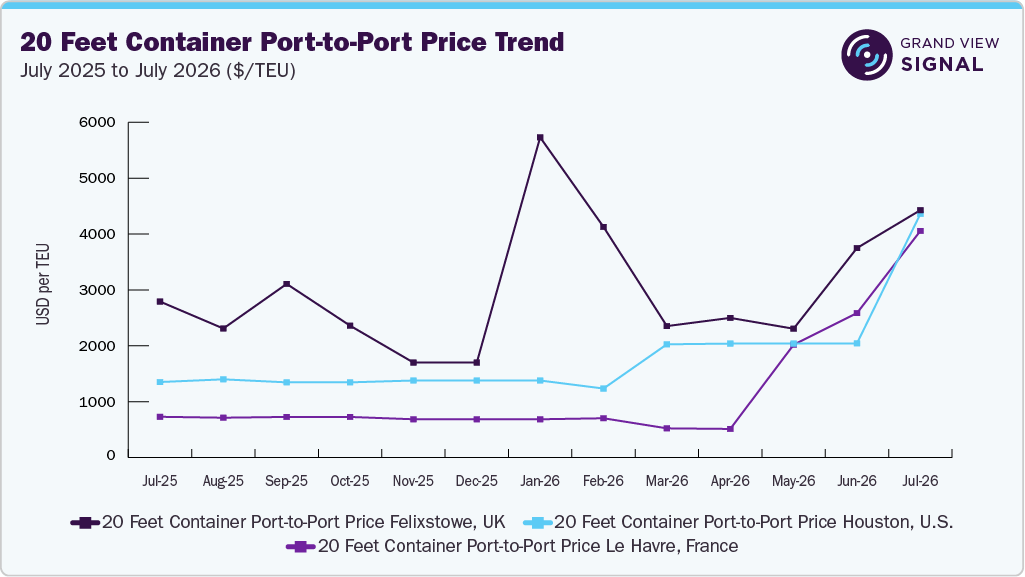
Compounding this demand instability is an even deeper, permanent shift: mandatory decarbonization policies. Regulatory compliance overhead is no longer an abstract corporate ESG goal, but an aggressive, non-negotiable line-item charge built directly into carrier pricing.
As a result, logistics spend can no longer be evaluated purely on fuel costs and lane distance. Freight procurement is transforming into a complex exercise in carbon liability modeling, cross-modal tracking, and margin protection.
Schedule a free demo of Grand View Signal to get real-time preview of price fluctuations in the Freight Sector
The Systemic Catalyst: Multi-Layered Maritime Decarbonization
Environmental regulations are systematically reshaping maritime commercial structures. Historically, environmental compliance costs were absorbed into general vessel operating expenses or masked within fluctuating bunker fuel formulas. Today, regulatory frameworks impose explicit financial consequences based on voyage emissions.
The combination of the European Union’s Emissions Trading System (EU ETS) expansion to shipping and the implementation of the FuelEU Maritime framework illustrates how legislative mandates restructure baseline container rates:
1. Full Emissions Accountability Under EU ETS
Under the phased rollout of the EU ETS maritime extension, coverage for in-scope vessels (5,000 GT and above calling at EU/EEA ports) has stepped up from partial requirements (40% in 2024 and 70% in 2025) to 100% full coverage.
Ocean carriers must surrender EU Allowances (EUAs) for:
- 100% of emissions on intra-EU/EEA voyages.
- 50% of emissions on international voyages between EU and non-EU ports.
- 100% of emissions while vessels are at berth in European ports.
Furthermore, the expansion of the regulatory basket to incorporate methane (CH4) and nitrous oxide (NO) alongside carbon dioxide (CO2) elevates the underlying emissions baseline. Because EU Allowance prices fluctuate on open carbon markets, ocean lines pass this variable liability directly to shippers as a dynamic "Emissions Surcharge" or "ETS Fee".
2. FuelEU Maritime Intensity Limits
Operating alongside carbon cap-and-trade systems, the FuelEU Maritime regulation enforces progressive reductions in the greenhouse gas (GHG) intensity of energy used on board vessels, starting with a 2% reduction requirement and escalating to 80% by 2050.
To comply, ocean lines must either purchase high-cost alternative fuels (such as green methanol or bio-blends carrying significant premiums over conventional Very Low Sulphur Fuel Oil) or incur statutory financial penalties under FuelEU Maritime set at €2,400 per metric tonne of VLSFO energy equivalent over the target. Either path increases operating expenditure, which carriers re-rate into base quotes or pass through via supplementary green surcharges.
Get historical, current, and forecast freight price assessments. Request Free Access to Grand View Signal
The Cross-Modal Domino Effect
Logistics friction rarely remains isolated to a single mode of transport. When ocean corridors experience capacity constraints, rerouting, or carbon-induced rate increases, the resulting operational shock waves ripple across all connected transport modes:
Urgent Air Cargo Diverts
High-value, time-sensitive inventory trapped by ocean delays, such as those caused by avoiding maritime transit corridors or enduring extended sailings around Africa's Cape of Good Hope, is frequently diverted to air freight. This sudden volume shift squeezes belly-hold capacity, causing air spot rates to surge on major trade corridors.
Landside Congestion
When rerouted vessels arrive at alternative destination ports simultaneously, local logistics infrastructure experiences concentrated arrival spikes. Class I rail networks and regional drayage fleets face severe volume bottlenecks, driving up chassis fees, storage costs, and demurrage penalties.
Out-of-Gauge and Industrial Impact
This cross-modal friction extends to specialized logistics. For out-of-gauge equipment, heavy machinery, and infrastructure components, port-to-port breakbulk rates from major Asian export hubs like Shanghai act as a key economic indicator. As multi-purpose vessel (MPV) capacity is reallocated to accommodate general cargo spillover, breakbulk rate fluctuations directly alter capital expenditure budgets for industrial projects long before consumer packaging feels the impact.
Asymmetric Pass-Through and Margin Squeezes
The fundamental challenge for Beneficial Cargo Owners lies in the asymmetry of transportation cost pass-through.
Carriers adjust to cost increases by deploying bi-weekly General Rate Increases (GRIs), Peak Season Surcharges (PSS), and updated green compliance fees. Conversely, enterprise shippers face cautious industrial and retail buyers who resist price increases.
Because enterprise sellers cannot easily adjust finished-goods prices mid-contract without risking market share, unbudgeted freight costs, whether an unexpected $500 carbon surcharge per FEU or a sudden peak-season air freight premium, must be absorbed directly, eroding enterprise operating margins.
Get detailed driver impact analysis on Freight Prices. Request Free Access to Grand View Signal
3 Strategic Imperatives for Freight Procurement Leaders
Navigating persistent volatility and regulatory cost escalation requires replacing reactive booking with structured procurement frameworks:
1. Unbundle Baseline Tariffs from Regulatory Surcharges
Procurement teams must insist on granular cost decomposition during contract negotiations. Base ocean rates must be explicitly separated from fuel recovery formulas and carbon surcharges. Isolating regulatory line items enables shippers to audit whether carrier surcharges accurately reflect actual market allowance prices (such as current EU Allowance valuations) or serve as hidden margin expansions.
2. Build Dynamic Cross-Modal Routing Options
Relying on a single transport corridor or mode creates operational vulnerability. Forward-thinking logistics teams map total landed costs across alternative routing configurations, including sea-air options and multi-port feeder setups, to bypass congested gateways and high-surcharge transit zones before capacity freezes.
3. Move from Fixed RFPs to Continuous Market Benchmarking
Annual static RFPs often become obsolete shortly after execution. Modern procurement departments utilize commodity pricing intelligence, such as Grand View Signal, for predictive risk analytics. Benchmarking freight rates against real-time physical spot market indicators empowers logistics managers to negotiate flexible index-linked contracts, evaluate forwarder quotes with transparency, and execute timely modal adjustments.
The Strategic Path Ahead
Carbon regulations, geopolitical frictions, and structural capacity constraints have permanently altered the economics of global transport. Decarbonization compliance is no longer a peripheral sustainability metric; it is an integral operational cost component that must be actively managed.
By unbundling carrier cost structures, developing multi-modal routing networks, and embedding real-time market data into procurement workflows, enterprise logistics leaders can protect operating margins and transform transport volatility into a strategic advantage.
Read our latest articles on
