Pages

Showing posts with label Energy Procurement. Show all posts

Wednesday, September 16, 2026

Carbon Arbitrage Is Reshaping Global Energy Procurement

Beyond the Utility Bill: The Emerging Carbon Arbitrage

A fundamental decoupling is underway across global energy markets: physical fuel prices and carbon compliance liabilities are no longer moving in tandem.

This divergence creates immediate margin risk for energy-intensive manufacturers. In the U.S. market alone, crude oil benchmarks in the U.S. recently surged by 23.8% while natural gas prices plunged by 12.1% over the exact same period. When you superimpose new regulatory mandates on top of these opposing commodity trends, most notably the European Union’s Carbon Border Adjustment Mechanism (CBAM), evaluating energy risk purely on a dollars-per-thermal-unit or dollars-per-barrel basis becomes dangerous.

Cross-border carbon tariffs have turned environmental compliance into an active, non-negotiable line-item charge on primary fuels and industrial inputs. Overseas suppliers that fail to document verified low-carbon production profiles now face direct financial penalties at the border, forcing procurement teams to completely overhaul their global sourcing criteria and risk models.

Schedule a free demo of Grand View Signal to get real-time preview of price fluctuations in the Energy Sector

The Regulatory Shifter: How Carbon Tariffs Override Pure Fuel Economics

Environmental compliance is no longer a peripheral corporate sustainability target; it is an aggressive, non-negotiable line-item charge built directly into primary fuel pricing. The transition of the European Union’s Carbon Border Adjustment Mechanism (CBAM) into its full financial compliance phase illustrates how legislative mandates are restructuring baseline energy costs globally across four core areas:

  • CBAM Embedded Emission Certificates: Importers of energy-intensive goods (hydrogen, electricity, steel, aluminum, fertilizers) must buy carbon certificates tied directly to EU ETS allowance prices. Overseas suppliers with high-carbon footprints face immediate border tariffs, making unmitigated energy sourcing financially unviable.
  • Global Carbon Allowance Markets: Stricter regional emissions trading schemes compel heavy fuel buyers to integrate carbon allowance pricing directly into thermal budgets. This forces purchasing teams to track carbon market volatility alongside raw thermal or barrel costs.
  • Renewable Fuel & Blend Mandates: Enforced quotas for Sustainable Aviation Fuel (SAF), renewable diesel, and green hydrogen integration require continuous rebalancing of physical fuel blends to avoid severe non-compliance penalties.
  • Tactical Export Duty Shifts: Governments unilaterally adjust national energy export tariffs to protect domestic reserves. This alters global trade flows overnight for thermal coal, crude, and refined products, exposing single-region buyers.

Get historical, current, and forecast energy price assessments. Request Free Access to Grand View Signal

5 Structural Forces Reshaping Global Energy Markets
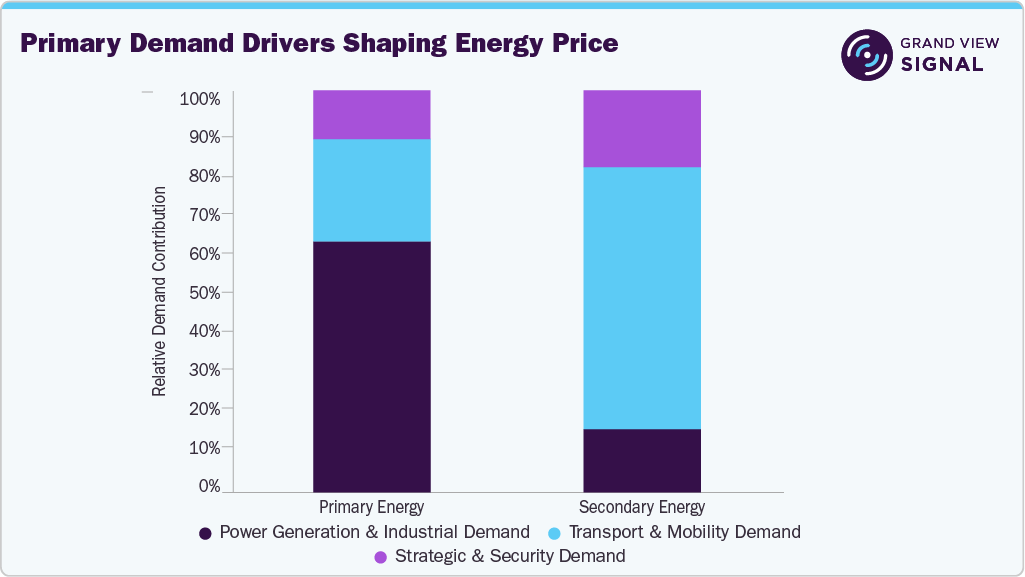
Primary Demand Drivers Shaping Energy Price, July 2026

To protect operating balance sheets, manufacturing and energy executives must evaluate five interconnected market drivers:

1. Upstream Crude Shifts & Transit Bottlenecks

Geopolitical threats across vital maritime corridors force shippers to execute extended detours around regional capes. These detours add up to two weeks to cargo transit schedules while driving up bunker fuel surcharges and ocean rates. Rallies in primary crude benchmarks directly lift production expenditures for downstream refiners, expanding regional feedstock spreads to multi-month highs.

2. Regional Gas Disruption & Infrastructure Strain

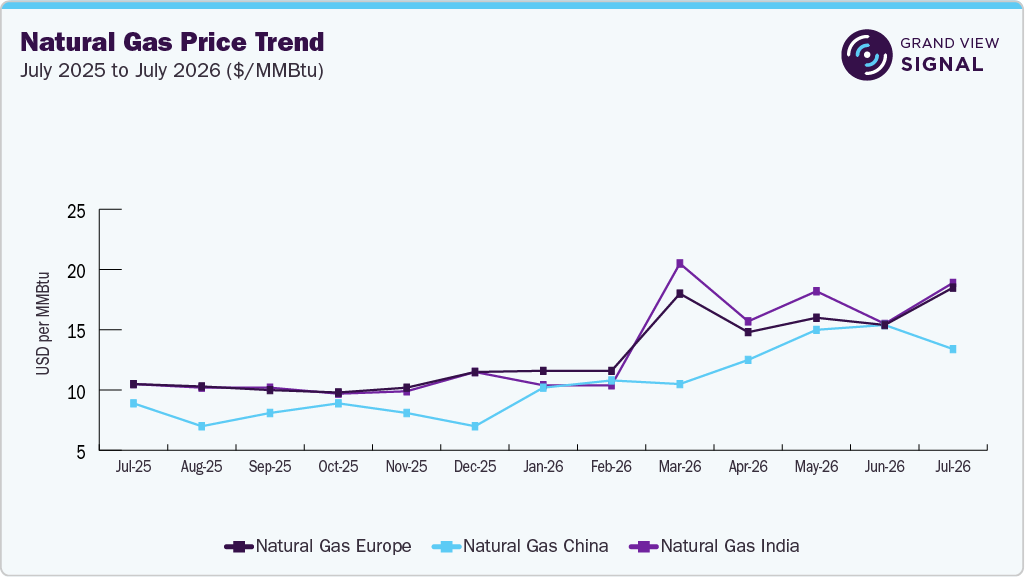
Unexpected pipeline overhauls, liquefaction terminal outages, and rapid inventory drawdowns frequently contract local gas supplies. When primary hubs experience physical capacity constraints, the disconnect between continuous industrial thermal demand and restricted physical supply triggers sharp price spikes that immediately squeeze fixed-rate buyers.

3. Evolving Environmental Policy & Carbon Tariffs

As CBAM demonstrates, regulatory compliance directly drives fuel costs. Sourcing teams must evaluate carbon-neutral, low-emission, and renewable fuel alternatives side-by-side with baseline fossil quotes to prevent border adjustments from wiping out gross margins.

4. Asymmetric Industrial Demand & Cost Pass-Through Friction

Despite upstream volatility, industrial purchasing across major manufacturing centers (metals, automotive, packaging) remains cautious. Because end-user demand is soft, manufacturers struggle to pass energy surcharges down to customers. Unbudgeted fuel spikes must be absorbed internally, compressing operating margins.

5. Shift to Localized Power & Dynamic Fuel-Switching

To insulate operations from international logistics shocks, major industrial hubs are investing in regional power infrastructure and dual-fuel generation. Following transit disruptions in the Middle East that caused acute natural gas shortfalls across South and East Asia, single-fuel gas consumers in fertilizer and garment hubs suffered severe output curbs and plant shutdowns. In contrast, manufacturing complexes in India that had proactively integrated dual-fuel capabilities (switching dynamically between PNG, LPG, and fuel oil) alongside localized rooftop solar bypassed grid curtailments, maintained baseline output, and protected operating margins.

Access commodity-wise monthly forecast datasets for the next 6 months. Request Free Access to Grand View Signal

The Enterprise Action Plan: 3 Strategic Priorities

To navigate ongoing volatility and carbon cost escalation, forward-thinking procurement teams are deploying three immediate operational adjustments:

  • Implement Multi-Fuel Infrastructure Flexibility: Industrial facilities should retrofit thermal generation assets with multi-fuel burners. Establishing dual-fuel flexibility allows plants to alternate among natural gas, LPG, and heavy fuel oil based on real-time price differentials, capturing immediate price arbitrage during fossil fuel spikes.
  • Execute Corporate Power Purchase Agreements (PPAs): To hedge long-term exposure to grid volatility and carbon compliance charges, enterprises should secure corporate PPAs with renewable energy developers. Contracting directly for solar or wind power isolates baseline utility budgets from fossil fuel price swings while automatically satisfying regional carbon reduction mandates.
  • Deploy Continuous Commodity Price Intelligence: Managing complex energy purchasing requires real-time data over trailing monthly averages. Modern procurement operations utilize SaaS-driven commodity pricing platform, such as Grand View Signal, to track cross-commodity spot data, monitor regional price spreads, and execute forward-looking cost decomposition. Clear visibility enables purchasing leaders to optimize buying schedules, negotiate transparent contracts, and execute timely hedging strategies before supply shocks occur.

Managing energy price volatility and carbon compliance is no longer a secondary sustainability task; it is a core driver of financial stability. By unbundling fuel tariffs from carbon liabilities, investing in dual-fuel infrastructure, and grounding procurement strategies in real-time commodity intelligence, enterprise decision-makers can protect operating margins and turn energy market volatility into a lasting competitive advantage.

Read our latest articles on

Tuesday, September 1, 2026

How Energy Market Volatility Is Reshaping Industrial Procurement

Industrial energy procurement once revolved around fixed utility tariffs, predictable pipeline spreads, and steady seasonal consumption patterns. However, the convergence of upstream crude swings, regional natural gas bottlenecks, maritime transit diversions, and stringent carbon mandates has severed primary energy pricing from legacy seasonal models. Today, sudden fuel surges ripple through enterprise cost structures far more quickly than standard procurement agreements can adjust to, transforming energy management into a high-stakes financial risk.

Succeeding in this landscape requires abandoning delayed price indices and spot-market speculation. Year-on-year metrics reveal significant divergence across fuel types. Within the U.S. market alone, crude oil benchmarks climbed by 23.8% while natural gas prices plunged by 12.1% over the exact same period. Navigating these opposing cost pressures demands constant market transparency. Operating as a SaaS-based commodity price intelligence platform, Grand View Signal equips procurement and executive leadership with the continuous clarity required to spot regional price gaps, mitigate feedstock exposure, and protect operating margins before supply shocks occur.

Natural Gas Price Trend July 2025 to July 2026 ($/MMBtu)

An analysis of the five core market forces altering global energy dynamics today highlights where decision-makers must focus their strategy.

1. Upstream Crude Shifts & Transit Corridor Bottlenecks

Geopolitical friction across critical maritime trade lanes directly threatens downstream fuel stability. When vessel transit routes around vital ocean corridors encounter security threats, shippers are forced to execute extended detours around regional capes. These extended sea routes add up to two weeks to cargo transit times while driving up bunker fuel surcharges and ocean freight rates.

Market Impact: Industrial consumers and power generation plants experience immediate margin compression as underlying crude and refined-product benchmark settlements fluctuate month over month. Rallies in primary crude benchmarks directly lift production expenditures for downstream refiners, driving regional feedstock spreads to multi-month highs. 

The financial strain manifests differently depending on supply exposure:

  • Import-Reliant Energy Consumers: Entities dependent on sea-borne crude shipments or foreign LNG cargoes endure compound cost increases from elevated freight tariffs paired with high physical spot quotes.
  • Domestic Basin Operations: Facilities linked directly to low-cost onshore extraction sites maintain a distinct cost shield, keeping global energy prices heavily fragmented by geography.

Schedule a free demo of Grand View Signal to get real-time preview of price fluctuations in the Energy Sector

2. Regional Gas Disruption & Infrastructure Strain

Local natural gas supplies frequently experience unexpected contraction due to scheduled pipeline overhauls, liquefaction terminal maintenance, or rapid inventory drawdowns across regional distribution networks.

When primary gas hubs experience capacity constraints, industrial end-users, ranging from chemical processing plants to heavy manufacturing facilities, face immediate availability challenges. The resulting disconnects between continuous thermal demand and restricted physical inventory triggers sharp rallies across core energy indices.

Market Impact: Commercial end-users operating under fixed-rate utility tariffs or rigid customer contracts face immediate margin squeeze, as sudden fuel spikes cannot be passed downstream, directly exposing operating profits to severe contraction.

3. Evolving Environmental Policy & Carbon Tariffs

Government regulations, carbon compliance schemes, and sustainability directives are actively reshaping the economics of primary fuels. Legislative bodies worldwide continue to enforce stringent environmental controls that alter fuel trade flows and processing overhead. For instance, the European Union’s Carbon Border Adjustment Mechanism (CBAM), which fully transitioned into its financial compliance phase in 2026. Under this mandate, importers of carbon-intensive commodities, including hydrogen, electricity, steel, and fertilizers, must purchase carbon certificates linked directly to EU Emissions Trading System (ETS) allowance prices to offset embedded emissions. Overseas suppliers failing to document low-carbon production face immediate financial penalties, forcing procurement teams to re-evaluate regional energy sourcing strategies to prevent non-compliance tariffs from eroding profit margins.

Market Impact: Regulatory penalties and compliance pricing fundamentally change raw fuel economics, forcing energy procurement teams to evaluate carbon-neutral and low-emission fuels alongside baseline market prices to avoid non-compliance surcharges.

Key regulatory pressures altering procurement include:

  • Emissions Compliance & Carbon Markets: Stricter carbon offset mechanisms compel heavy fuel buyers to integrate carbon allowance pricing directly into their thermal fuel sourcing budgets.
  • Renewable Fuel Mandates: Enforced targets for sustainable aviation fuel (SAF), renewable diesel, and green hydrogen integration require procurement teams to continually rebalance fuel blends to avoid noncompliance penalties.
  • Export Duty Adjustments: Tactical policy changes to national energy export duties allow governments to safeguard domestic supply, shifting global trade flows for thermal coal, crude, and refined products overnight.

Get historical, current, and forecast energy price assessments. Request Free Access to Grand View Signal

4. Asymmetric Industrial Demand & Cost Pass-Through Friction

Even as upstream crude and natural gas benchmarks experience volatility, industrial purchasing across major manufacturing centers remains cautious and selective. Energy-intensive sectors, such as primary metals, automotive manufacturing, commercial real estate, and consumer packaging, are maintaining conservative procurement stances.

Market Impact: Because end-user demand remains soft, manufacturers are unable to fully pass through energy surcharges, resulting in margin compression for facilities using physically constrained fuel lines.

5. Transition to Localized Power & Dynamic Fuel-Switching

To protect operational continuity from global shipping delays and volatile international fuel prices, major industrial zones are investing heavily in regional power infrastructure and localized renewable generation. A prime example unfolded across South and East Asia following transit frictions in the Middle East, where acute natural gas import shortfalls forced widespread industrial rationing. While single-fuel gas consumers across fertilizer and garment processing hubs faced severe output curbs and plant shutdowns, energy-intensive manufacturing complexes in India that had proactively integrated dual-fuel capacity (alternating between PNG, LPG, and fuel oil) and localized rooftop solar generation bypassed grid curtailments, maintained baseline production, and protected operating margins.

Market Impact: Companies adopting dynamic sourcing and dual-fuel infrastructure gain immediate cost advantages by capturing price arbitrage during fossil fuel price spikes while hedging long-term exposure to grid volatility.

Simultaneously, enterprise purchasing teams are redesigning their energy sourcing models to defend profit margins:

  • Dual-Fuel Flexibility: Industrial facilities are upgrading thermal generation assets with multi-fuel burners, enabling them to switch among natural gas, LPG, and fuel oil based on real-time price differentials.
  • Corporate PPA Execution: Large commercial enterprises are increasingly securing long-term Power Purchase Agreements (PPAs) with renewable energy developers to insulate baseline budgets from fossil fuel swings.
  • Multi-Hub Sourcing Networks: Procurement leaders are diversifying away from reliance on single-pipeline routes, establishing multi-region supply contracts to mitigate localized network outages.

Access commodity-wise monthly forecast datasets for the next 6 months. Request Free Access to Grand View Signal

How Grand View Signal Helps Mitigate Commodity Price Risks

Managing energy purchasing in an era of sudden price spikes, transit disruptions, and carbon policy shifts demands moving past reactive decision-making. Enterprise leaders can no longer depend on outdated market reports or informal trade rumors.

As a dedicated SaaS-based technology solution, Grand View Signal transforms complex energy market data into actionable intelligence:

  • Mitigating Fuel Price Swings: When upstream oil and gas benchmarks fluctuate, Signal delivers real-time price assessments across major global energy commodities, including crude oil, natural gas, LNG, refined fuels, and coal. Its analytics cover monthly, quarterly, annual, and multi-year timeframes to help risk management teams protect margins.
  • Predicting Supply Outages: Instead of being caught unprepared by refinery turnarounds, pipeline maintenance, or LNG export disruptions, Signal combines historical trend analysis with forward-looking forecast models. This enables procurement leaders to anticipate energy cost spikes before power bills and thermal costs erode corporate margins.
  • Navigating Regulatory and Policy Shifts: As nations introduce carbon taxes, alter fuel tariffs, or update clean energy requirements, Signal tracks policy developments and regional risk metrics. Subscribing organizations can benchmark alternative fuel sources and align sourcing strategies with emerging regulatory standards.
  • Defending Operating Margins: To manage the disconnect between elevated energy costs and cautious industrial demand, Signal offers granular cost-structure decomposition and predictive risk modeling. This empowers commercial and purchasing teams to negotiate better utility contracts, execute data-backed hedging strategies, and defend operating margins.

Managing energy market volatility requires continuous foresight. Grand View Signal addresses this complexity by combining live market updates, historical pricing trends, and forward-looking forecast models across global energy markets. By tracking shifting feedstock pricing, carbon policies, and regional cost spreads, Signal empowers procurement and finance leaders to shift from reactive purchasing to a strategic, margin-defending sourcing approach.

Read our latest articles on