Pages

Monday, January 5, 2026

Microscope Software Market: Zooming into the Future of Imaging Technology

The global microscope software market was valued at USD 805.09 million in 2022 and is projected to reach USD 1.49 billion by 2030, expanding at a CAGR of 8.03% from 2023 to 2030. Market growth is primarily driven by rising investments in research and development within the microscopy domain, along with continuous technological advancements in both microscopes and associated software solutions.

Increasing government support aimed at expanding the use of microscope software in areas such as precision modeling and virus imaging has further accelerated market growth. For example, in January 2021, UK Research and Innovation (UKRI) announced an investment of approximately USD 220 million to enhance and expand its research infrastructure. This initiative was intended to support efforts related to COVID-19 research and recovery, as well as progress toward net zero objectives.

Global Microscope Software Market share and size, 2022

Industries across multiple sectors are increasingly demanding improved performance, accuracy, and reliability to enhance research and analytical outcomes. Digital microscopes integrated with advanced software play a critical role in applications such as documentation, quality control, production monitoring, failure analysis, and scientific research. Industries benefiting from these integrated systems include natural sciences, pharmaceuticals, healthcare, aerospace, machining, and microelectronics. For instance, the VHX-7000 series digital microscope from Keyence Corporation combines analysis software with high-resolution 4K imaging, enabling researchers to capture detailed images and conduct both 2D and 3D measurements within a single platform. This integration addresses many limitations associated with conventional microscopes and scanning electron microscopes (SEMs).

Technological innovation continues to be a key trend shaping the microscope software market. Companies are increasingly focused on developing advanced software solutions that enhance automation, connectivity, and analytical capabilities. In February 2019, ZEISS introduced the ZEISS ZEN core software suite, which incorporates new analysis and networking features. This comprehensive solution supports automated analysis, advanced microscope imaging, and multi-modal operations within interconnected materials laboratory environments.

Order a free sample PDF of the Microscope Software Market Intelligence Study, published by Grand View Research.

Key Market Trends & Insights

  • Regional Outlook: Asia Pacific led the global market in 2022, accounting for more than 36.26% of total revenue. The region is also expected to record the fastest growth, with a projected CAGR of 9.22% over the forecast period. This growth is driven by the presence of major manufacturers in countries such as Japan, along with a growing base of domestic producers in China and India. Additionally, increasing demand for diagnostic centers, expanding healthcare infrastructure, and a rising number of R&D initiatives are expected to support continued regional market expansion.
  • By Microscope Type: The electron microscopes segment held the largest market share at 41.08% in 2022. Owing to their higher cost compared to optical microscopes, electron microscopes are primarily used by well-funded research institutions and industrial facilities. Strengthening collaborations between academic institutions, research organizations, and manufacturers are expected to increase the adoption and market penetration of electron microscopes.
  • By Software Type: The integrated software segment dominated the market with a revenue share of 76.64% in 2022. This dominance is attributed to the widespread use of integrated platforms that combine multiple imaging techniques and functionalities, including image processing, data analysis, and automation, enabling researchers to conduct comprehensive sample analysis within a single system.
  • By Application: The life sciences segment accounted for the largest market share at 29.14% in 2022. Various types of compound microscopes—such as inverted, upright, fluorescence, laser microdissection, and digital microscopes—are extensively used in life science research. Moreover, the expanding role of microscopy in disease diagnosis and biomedical research continues to drive growth in this segment.

Market Size & Forecast

  • 2022 Market Size: USD 805.09 Million
  • 2030 Projected Market Size: USD 1.49 Billion
  • CAGR (2023-2030): 8.03%
  • Asia Pacific: Largest market in 2022

Key Companies & Market Share Insights

The microscope software market is fragmented, with the presence of both multinational corporations and regional players. Companies are actively pursuing strategic initiatives such as new product launches, partnerships, and acquisitions to strengthen their market position. For example, in January 2023, Oxford Instruments launched Imaris 10.0, the latest version of its microscopy image analysis software. This updated release enhances visualization speed and computational performance, enabling neuroscience researchers to more effectively analyze complex neuronal structures.

Key Players

  • Carl Zeiss AG
  • Nikon Corporation
  • Leica Microsystems
  • Thermo Fisher Scientific Inc.
  • Oxford Instruments plc,
  • Olympus Corporation
  • JEOL Ltd.
  • Basler AG
  • Hitachi High-Tech Corporation
  • Gatan, Inc.

Explore Horizon Databook – The world's most expansive market intelligence platform developed by Grand View Research.

Conclusion

The global microscope software market is poised for steady growth through 2030, supported by increased R&D investments, expanding government funding, and rapid technological advancements in digital microscopy. The rising adoption of integrated software solutions across life sciences, healthcare, and industrial applications underscores the growing importance of advanced imaging and analysis tools. With Asia Pacific leading in market share and innovation, and ongoing product development by key industry players, the market is expected to continue evolving to meet the increasing demand for high-precision, efficient, and automated microscopy solutions worldwide.

Micro Battery Market 2030: Powering the Future of Miniaturization

The global micro battery market was valued at USD 665.4 million in 2024 and is expected to reach USD 2,310.6 million by 2030, expanding at a CAGR of 23.3% from 2025 to 2030. Market growth is primarily driven by the rising need for compact and efficient power sources across applications such as wearable electronics, medical devices, IoT sensors, and portable consumer electronics.

The market is experiencing strong momentum due to rapid device miniaturization and the increasing demand for dependable, long-lasting power solutions. Consumer electronics—including smartphones, smartwatches, hearing aids, and fitness trackers—continue to decrease in size while increasing in functionality. This trend has intensified the need for small yet powerful energy storage solutions, positioning micro batteries as an essential component in modern electronic design.

Micro battery market size and growth forecast (2020-2030)

Growing demand for compact and portable electronic devices remains a key driver of the global micro battery market. The expanding adoption of wearable technologies such as smartwatches, fitness bands, and hearing aids has significantly increased the requirement for lightweight batteries capable of delivering consistent and durable power. Micro batteries, known for their high energy density and space-saving form factor, are well suited for these applications. Additionally, the healthcare industry is emerging as a major growth contributor, with rising demand for advanced medical devices such as implantable monitors, biosensors, and drug delivery systems, all of which rely on miniaturized and reliable power sources.

The rapid growth of the Internet of Things (IoT) is another major factor supporting market expansion. IoT is transforming a wide range of industries, including home automation, manufacturing, agriculture, and smart city infrastructure. As the number of connected devices continues to increase, demand for compact, energy-efficient, and low-maintenance batteries is also rising. Micro batteries—particularly thin-film and solid-state variants—are well suited for these applications due to their durability, compact size, and performance in confined spaces. Furthermore, ongoing investments in research and development, along with continuous advancements in battery technology, are helping reduce manufacturing costs, improve energy efficiency, and enable new use cases, thereby accelerating market growth.

Order a free sample PDF of the Micro Battery Market Intelligence Study, published by Grand View Research.

Key Market Trends & Insights

  • Regional Analysis: The Asia Pacific region accounted for the largest revenue share of 37.0% in 2024. This dominance is attributed to strong electronics manufacturing ecosystems in China, Japan, and South Korea. The region benefits from a high concentration of battery manufacturers, widespread adoption of wearable technologies, a robust consumer electronics industry, and access to cost-effective labor and raw materials.
  • By Material: The lithium segment held the largest revenue share of 51.1% in 2024. Lithium micro batteries are favored for their high energy density, extended shelf life, and reliable performance across a wide temperature range. They are widely used in medical implants, wearable devices, and remote sensors where compact size and long operational life are essential. These batteries support both primary and secondary chemistries, with solid-state lithium variants gaining traction due to enhanced safety and stability.
  • By Capacity: Micro batteries with capacities ranging from 10 mAh to 100 mAh represented the largest market share in 2024. Their dominance is driven by extensive use in wearables, medical devices, and smart consumer electronics. These batteries provide an optimal balance between small form factor and sufficient power output, making them ideal for fitness trackers, hearing aids, smartwatches, and continuous glucose monitors. Advantages such as stable discharge performance, long service life, and compatibility with lithium-ion and silver oxide chemistries further support their widespread adoption.
  • By Battery Type: Primary micro batteries accounted for the largest revenue share in 2024. Their strong presence is attributed to their use in low-drain, long-life applications such as wristwatches, medical implants, hearing aids, smart cards, and remote controls. Lithium- and silver oxide-based primary batteries offer long shelf life, consistent voltage output, and minimal maintenance, making them suitable for applications where battery replacement is infrequent or impractical.
  • By Type: Button batteries held the largest market revenue share in 2024 due to their extensive use in hearing aids, wristwatches, calculators, medical implants, and remote controls. These disc-shaped batteries are valued for their compact size, high reliability, stable voltage, and long shelf life in low-drain applications. Continuous improvements in lithium and silver oxide chemistries are enhancing their capacity and safety. Additionally, an aging population and increasing demand for compact medical monitoring devices are supporting growth in this segment.

Market Size & Forecast

  • 2024 Market Size: USD 665.4 Million
  • 2030 Projected Market Size: USD 2,310.6 Million
  • CAGR (2025-2030): 23.3%
  • Asia Pacific: Largest market in 2024
  • North America: Fastest growing market

Key Companies & Market Share Insights

The micro battery market is moderately consolidated, with a mix of large multinational corporations and innovative small- and medium-sized players. Established battery manufacturers coexist with startups focused on next-generation technologies, creating a dynamic and competitive landscape.

Murata is a prominent player in the market, known for its high-performance lithium and silver oxide coin cell batteries used in medical devices, wearable electronics, and industrial applications. The company places strong emphasis on miniaturization, energy density, and reliability, and has established strategic partnerships with healthcare and biosensor companies to strengthen its presence in the medical segment.

Key Players

  • Blue Spark Technologies, Inc.
  • Front Edge Technology, Inc.
  • Enfucell SoftBattery
  • Panasonic Corporation
  • Molex
  • TDK Corporation
  • Shenzhen Grepow Battery Co., Ltd.
  • VARTA AG
  • Murata Manufacturing Co., Ltd.
  • SAMSUNG SDI

Explore Horizon Databook – The world's most expansive market intelligence platform developed by Grand View Research.

Conclusion

The global micro battery market is set for rapid expansion through 2030, driven by accelerating device miniaturization, rising adoption of wearable and medical technologies, and the growing deployment of IoT systems. With strong demand for compact, high-performance, and energy-efficient power solutions, micro batteries are becoming a critical enabler of next-generation electronics. Technological advancements, increasing focus on sustainability, and expanding applications across healthcare and smart devices will continue to shape market growth. As innovation intensifies and regional manufacturing hubs strengthen, the micro battery market is well positioned to experience sustained and robust development in the coming years.

Low Rolling Resistance Tire Market: Rolling Towards Efficiency

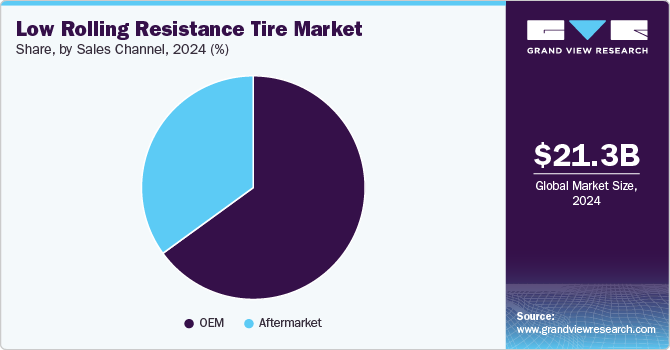
The global low rolling resistance (LRR) tire market was valued at USD 21.25 billion in 2024 and is expected to expand to USD 43.57 billion by 2030, registering a CAGR of 12.7% from 2025 to 2030. This strong growth trajectory is primarily driven by advancements in tire technology, increasing environmental awareness, and rising consumer preference for fuel-efficient mobility solutions.

A key benefit of low rolling resistance tires lies in their ability to improve vehicle fuel efficiency. These tires are engineered to minimize energy losses caused by tire deformation during motion, which directly enhances fuel economy. Research suggests that vehicles equipped with LRR tires can experience fuel efficiency improvements ranging from 5% to 10%. This advantage makes them highly attractive to both individual consumers and commercial operators seeking to reduce fuel expenses amid escalating energy costs.

Low Rolling Resistance Tire Market Share by Sales Channel, 2024 (%)

Environmental considerations also play a significant role in accelerating the adoption of low rolling resistance tires. Governments across the globe are enforcing stricter vehicle emission regulations, and LRR tires provide an effective means to comply with these standards. By lowering fuel consumption, these tires help reduce greenhouse gas emissions, supporting global initiatives focused on sustainability and climate change mitigation.

Technological progress has further strengthened the market outlook. Innovations in materials, including the use of silica and graphene, have allowed manufacturers to reduce hysteresis losses while maintaining safety, durability, and traction. As a result, modern LRR tires deliver reliable performance across various road and weather conditions. Additionally, lightweight construction and optimized tread patterns contribute to improved efficiency and extended tire life.

Order a free sample PDF of the Low Rolling Resistance Tire Market Intelligence Study, published by Grand View Research.

Key Market Trends & Insights

  • Regional Outlook: The Asia Pacific region held the largest market share of 26.9% in 2024 and is projected to grow at a CAGR of 13.8% from 2025 to 2030. This dominance is supported by rapid growth in automotive production and increasing electric vehicle adoption. China and India are major contributors, with China leading in vehicle manufacturing and sales. Strong public and private investments in advanced tire technologies, along with a growing emphasis on fuel efficiency and sustainability, continue to drive regional demand.
  • By Vehicle Type: Passenger cars accounted for approximately 41.1% of the total revenue share in 2024. Growth in this segment is fueled by rising demand for fuel-efficient vehicles among environmentally conscious consumers. LRR tires help reduce rolling energy loss, resulting in cost savings and lower emissions. Stringent emission regulations have further encouraged automakers to integrate LRR tires into passenger vehicle models.
  • By Width: Wide-band low rolling resistance tires are gaining traction due to their ability to distribute vehicle weight more evenly, thereby reducing frictional heat and tire wear. These characteristics make them ideal for heavy commercial vehicles and long-haul operations, where durability and fuel efficiency are essential. Their suitability for electric vehicles further supports their increasing adoption.
  • By Sales Channel: The OEM segment accounted for a significant share of the market in 2024, driven by the installation of LRR tires during vehicle manufacturing. Automakers are adopting these tires to meet regulatory requirements related to fuel efficiency and carbon emissions. LRR tires are commonly offered as standard equipment in hybrid and electric vehicles, where energy efficiency is a major selling point.

Market Size & Forecast

  • 2024 Market Size: USD 21.25 Billion
  • 2030 Projected Market Size: USD 43.57 Billion
  • CAGR (2025-2030): 12.7%
  • Asia Pacific: Largest market in 2024

Key Companies & Market Share Insights

Leading companies such as Bridgestone, Michelin, Goodyear, Continental, and Pirelli hold a dominant position in the market due to their strong brand recognition, extensive product portfolios, and robust research and development capabilities. These manufacturers utilize advanced technologies to develop LRR tires suitable for both internal combustion engine vehicles and electric vehicles.

For instance, Bridgestone’s Ecopia range and Michelin’s Primacy low rolling resistance HP tires are designed to enhance fuel efficiency without compromising safety or performance. Their global reach and ability to serve diverse vehicle segments provide a strong competitive advantage. As electric vehicle adoption rises and emission regulations become more stringent, competition is expected to intensify. Companies focusing on sustainability, innovation, product diversification, and strategic partnerships are likely to maintain market leadership.

Key Players

  • Bridgestone Corporation
  • Michelin
  • Goodyear Tire & Rubber Company
  • Continental AG
  • Pirelli & C. S.p.A.
  • Hankook Tire
  • Yokohama Rubber Co. Ltd.
  • Apollo Tyres Ltd.
  • Cheng Shin Rubber Industry Co. (Maxxis)
  • Kumho Tire
  • Zhongce Rubber Group Co., Ltd. (ZC-Rubber)
  • Nokian Tyres plc
  • MRF Tyres
  • Sumitomo Rubber Industries, Ltd.
  • Firestone Tire and Rubber Company
  • Cooper Tire & Rubber Company
  • Toyo Tire & Rubber Company

Explore Horizon Databook – The world's most expansive market intelligence platform developed by Grand View Research.

Conclusion

The global low rolling resistance tire market is poised for substantial growth, driven by the convergence of regulatory pressure, technological innovation, and increasing demand for fuel-efficient and sustainable transportation solutions. With significant gains in fuel economy, reduced environmental impact, and compatibility with electric vehicles, LRR tires have become a critical component of the evolving automotive ecosystem. As automakers and consumers continue to prioritize efficiency and sustainability, and as emerging markets—particularly in Asia Pacific—expand rapidly, the demand for low rolling resistance tires is expected to grow steadily through 2030. Companies that invest in advanced materials, eco-friendly designs, and strategic collaborations will be well-positioned to capitalize on this expanding market opportunity.

Friday, January 2, 2026

Live Streaming Market 2030: The Future of Entertainment Unveiled

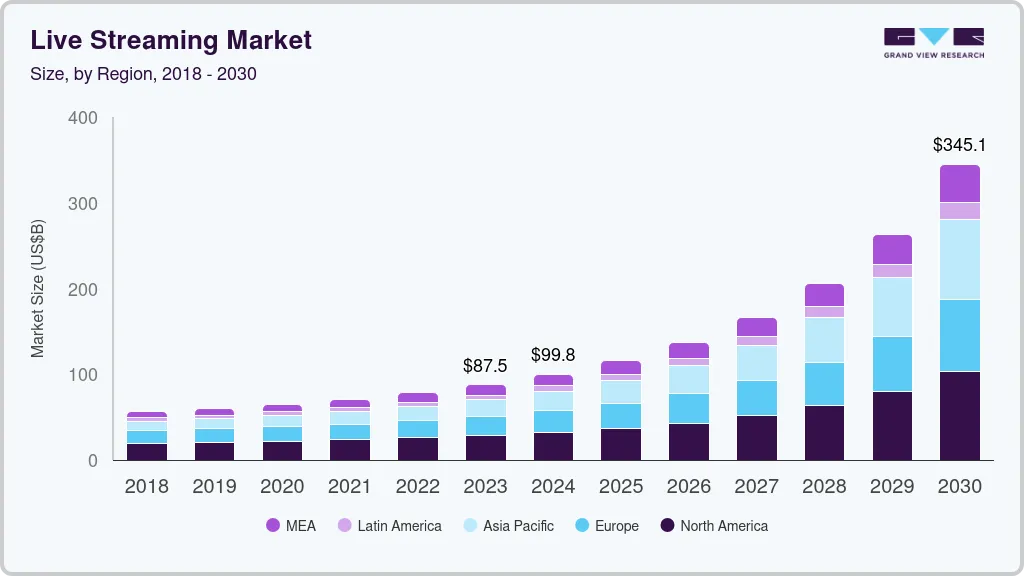
The global live streaming market was valued at USD 87.55 billion in 2023 and is expected to reach USD 345.13 billion by 2030, expanding at a CAGR of 23.0% from 2024 to 2030. The market’s rapid growth reflects a fundamental shift in how audiences consume digital content. Viewers are increasingly moving away from passive consumption of pre-recorded media and are instead seeking interactive, real-time experiences that allow direct engagement with content creators.

Live streaming has emerged as a powerful medium to meet this demand for interactivity. Features such as live Q&A sessions with influencers, experts, and brands on platforms like Instagram Live and YouTube Live enable audiences to participate actively by asking questions and receiving immediate responses. This real-time engagement transforms content consumption into a more immersive and participatory experience, strengthening audience involvement and fostering deeper connections between brands, creators, and viewers.

Live streaming market size by region, and growth forecast (2024-2030)

Another major driver of market growth is the widespread adoption of multi-platform and multi-device content consumption. Audiences increasingly access live streams through smartphones, tablets, smart TVs, gaming consoles, and other connected devices. This flexibility allows users to watch content anytime and anywhere, supporting mobile and on-the-go lifestyles. Seamless transitions across devices enhance viewing continuity and increase overall engagement. For content creators, this trend expands audience reach and enables the delivery of tailored experiences across diverse viewing environments. Companies such as Netflix have successfully embraced this approach by offering content across multiple devices, highlighting the growing importance of platform versatility.

Emerging technologies such as virtual reality (VR), augmented reality (AR), and mixed reality (MR) are further accelerating the evolution of live streaming. These technologies enhance immersion by allowing creators to integrate virtual environments, interactive overlays, and real-time visual enhancements into their broadcasts. VR live streaming can place viewers within the event itself, while AR elements provide additional information and interactive features during live sessions. As these technologies become more accessible, they are creating new opportunities for differentiation and innovation in an increasingly competitive live streaming landscape.

Order a free sample PDF of the Live Streaming Market Intelligence Study, published by Grand View Research.

Key Market Trends & Insights

  • Regional Insights: North America dominated the global live streaming market in 2023, accounting for 32.60% of total revenue. Strong audience interest in live entertainment, gaming, sports, and e-learning continues to fuel regional growth. As demand for real-time and interactive experiences rises, content creators and platforms are expanding offerings tailored to North American preferences, making the region a key revenue generator.
  • Component Insights: The platforms segment led the market with a revenue share of 64.03% in 2023. Growth in this segment is driven by changing user preferences, technological innovation, and expanding content diversity. Established platforms such as Twitch, YouTube Live, and Facebook Gaming continue to dominate, while niche platforms targeting specific interests—such as gaming, education, and professional networking—are gaining traction. Social media platforms including Instagram, Twitter, and TikTok are also integrating live streaming features, broadening market reach.
  • Type Insights: The video streaming segment accounted for the largest share of market revenue in 2023. Widespread access to high-speed internet and affordable data plans has significantly expanded the global audience for live video content. Over-the-top (OTT) platforms such as Twitch, YouTube Live, and Facebook Live provide live streams across gaming, sports, and events, attracting viewers worldwide.
  • Revenue Model Insights: The ad-supported segment generated the highest revenue share in 2023. Free access to content under this model attracts large audiences, creating valuable advertising opportunities. Advanced targeting and analytics allow advertisers to reach specific demographics, driving strong monetization for platforms and creators while encouraging continuous content production.
  • End-Use Insights: The gaming segment held the largest market revenue share in 2023. The rise of esports has transformed gaming into a mainstream spectator activity, with professional players and streamers attracting large audiences and sponsorships. Interactive features such as live chat and viewer donations further enhance engagement, loyalty, and monetization within the gaming ecosystem.

Market Size & Forecast

  • 2023 Market Size: USD 87.55 Billion
  • 2030 Projected Market Size: USD 345.13 Billion
  • CAGR (2024-2030): 23.0%
  • North America: Largest market in 2023
  • Asia Pacific: Fastest growing market

Key Companies & Market Share Insights

Leading companies in the live streaming market are actively pursuing strategies such as product launches, technological enhancements, partnerships, collaborations, and mergers to strengthen their market positions. These initiatives aim to expand platform capabilities, improve user experience, and increase market penetration.

For example, in April 2024, Google Meet, developed by Google LLC, partnered with BRANDLIVE, INC. to provide Workspace users with seamless access to customizable online events and webinars for up to 1,000 participants. This collaboration integrated Google Meet’s familiar interface with Brandlive’s advanced event management tools, enhancing live event hosting capabilities.

Key Players

  • Dacast, Inc.
  • Empire Video Productions LLC
  • Flux Broadcast Ltd.
  • Huya Inc.
  • International Business Machines Corporation
  • Meta
  • Pluto Inc.
  • TikTok Inc.
  • Twitch Interactive, Inc.
  • Vimeo, Inc.

Explore Horizon Databook – The world's most expansive market intelligence platform developed by Grand View Research.

Conclusion

The live streaming market is undergoing rapid expansion, driven by growing demand for real-time, interactive content, widespread multi-device accessibility, and advancements in immersive technologies such as VR and AR. With the market projected to grow from USD 87.55 billion in 2023 to USD 345.13 billion by 2030 at a CAGR of 23.0%, live streaming is becoming a central component of digital media consumption. Continued innovation in platform capabilities, monetization models, and immersive experiences will further strengthen audience engagement and position live streaming as a dominant force in the global digital entertainment and communication ecosystem.

Lithium-ion Battery Recycling Market: Powering a Greener Future

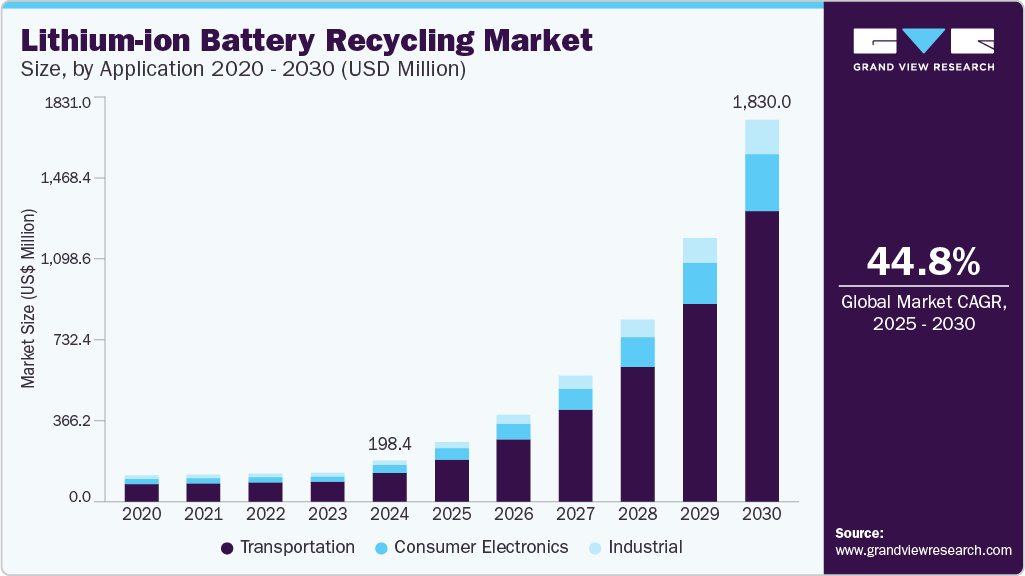
The global lithium-ion battery recycling market was valued at USD 198.37 million in 2024 and is expected to reach USD 1,830 million by 2030, expanding at a CAGR of 44.8% from 2025 to 2030. Rapid growth in this market is largely attributed to the rising adoption of electric vehicles (EVs) and the widespread use of consumer electronic devices.

According to the International Energy Agency (IEA), global electric car sales exceeded 2.3 million units, reflecting a 25% increase compared to the previous year. Projections indicated that approximately 14 million electric vehicles would be sold by the end of 2023, representing an annual growth rate of 35%, driven primarily by increased purchases during the second half of the year. This accelerating adoption of EVs is significantly increasing demand for lithium-ion batteries and, consequently, the need for effective recycling solutions.

Lithium-ion Battery Recycling Market

Lithium-ion battery recycling has become a vital component of the global transition toward sustainability and renewable energy adoption. Growing demand for lithium-ion batteries across consumer electronics, renewable energy storage systems, and EVs has resulted in a substantial increase in battery waste. For example, data from the Commonwealth Scientific and Industrial Research Organization (CSIRO) indicates that lithium-ion battery waste in Australia is increasing at an annual rate of 20%, while only 10% of total battery waste was recycled in 2021. These trends highlight the substantial opportunity for market participants to address environmental challenges while benefiting from the increasing focus on sustainable battery solutions.

Market growth is further supported by rising volumes of battery waste, government incentives promoting recycling, and growing consumer awareness regarding environmental protection. In February 2022, Glencore and Britishvolt entered into a joint venture aimed at establishing a battery recycling ecosystem in the United Kingdom. While the transition to a circular economy presents challenges such as high capital investment requirements and regulatory complexities, it also creates significant opportunities for innovation, collaboration, and long-term value creation. Intensifying competition among industry players continues to drive technological advancements and partnerships across the recycling value chain.

Order a free sample PDF of the Lithium-ion Battery Recycling Market Intelligence Study, published by Grand View Research.

Key Market Trends & Insights

  • Regional Insights: Asia Pacific held the largest revenue share of the global lithium-ion battery recycling market in 2024. Market growth in the region is driven by the availability of low-cost batteries, rapid EV adoption fueled by increased awareness of sustainable mobility, and strong demand for consumer electronics. Additionally, population growth in major economies such as China and India continues to support rising battery consumption, further accelerating recycling demand.
  • Application Insights: The transportation segment dominated the market with a revenue share of 69.79% in 2024. Lithium-ion batteries are widely preferred in transportation due to their high energy density, long cycle life, low memory effect, and fast recharge capabilities. Recycled batteries are increasingly being repurposed for stationary energy storage applications within the automotive sector, supporting grid stabilization and renewable energy integration. Similarly, the electronics industry reuses recovered battery materials to manufacture products such as smartphones, wearables, and computers, reducing reliance on virgin raw materials.

Market Size & Forecast

  • 2024 Market Size: USD 198.37 Million
  • 2030 Projected Market Size: USD 1,830 Million
  • CAGR (2025-2030): 44.8%
  • Asia Pacific: Largest market in 2024

Key Companies & Market Share Insights

Major players operating in the lithium-ion battery recycling market include Contemporary Amperex Technology Co., Limited (CATL), LG Energy Solution, Panasonic Corporation, and SAMSUNG SDI CO., LTD. These companies are actively investing in innovation, sustainability initiatives, and recycling technologies to strengthen their market positions.

  • Contemporary Amperex Technology Co., Limited is recognized for continuous advancements in battery technology, particularly its leadership in cobalt-free Lithium Ferro Phosphate (LFP) batteries, which offer improved safety and environmental benefits.
  • LG Energy Solution focuses on the design and production of lithium-ion batteries for electric vehicles, IT applications, energy storage systems, and mobility solutions, contributing to the advancement of clean and sustainable energy ecosystems.

Key Players

  • Contemporary Amperex Technology Co., Limited
  • LG Energy Solution
  • Panasonic Corporation
  • SAMSUNG SDI CO., LTD.
  • BYD
  • SVOLT Energy
  • Tesla
  • Shenzhen Manly Battery Co.
  • TOSHIBA CORPORATION
  • SK on Co., Ltd
  • CALB
  • Gotion, Inc.
  • Sunwoda Electronic Co., Ltd
  • Li-Cycle Corp.
  • Helbiz

Explore Horizon Databook – The world's most expansive market intelligence platform developed by Grand View Research.

Conclusion

The lithium-ion battery recycling market is set for exceptional growth, driven by the rapid expansion of electric vehicle adoption, rising battery waste volumes, and increasing emphasis on sustainability and circular economy practices. With the market projected to grow from USD 198.37 million in 2024 to USD 1,830 million by 2030 at a CAGR of 44.8%, recycling solutions will play a critical role in securing raw material supply, reducing environmental impact, and supporting renewable energy integration. Despite challenges related to capital investment and regulatory compliance, continued innovation, government support, and industry collaboration are expected to unlock significant long-term opportunities for market participants.

Law Enforcement Software Market: Digital Tools Driving Modern Policing

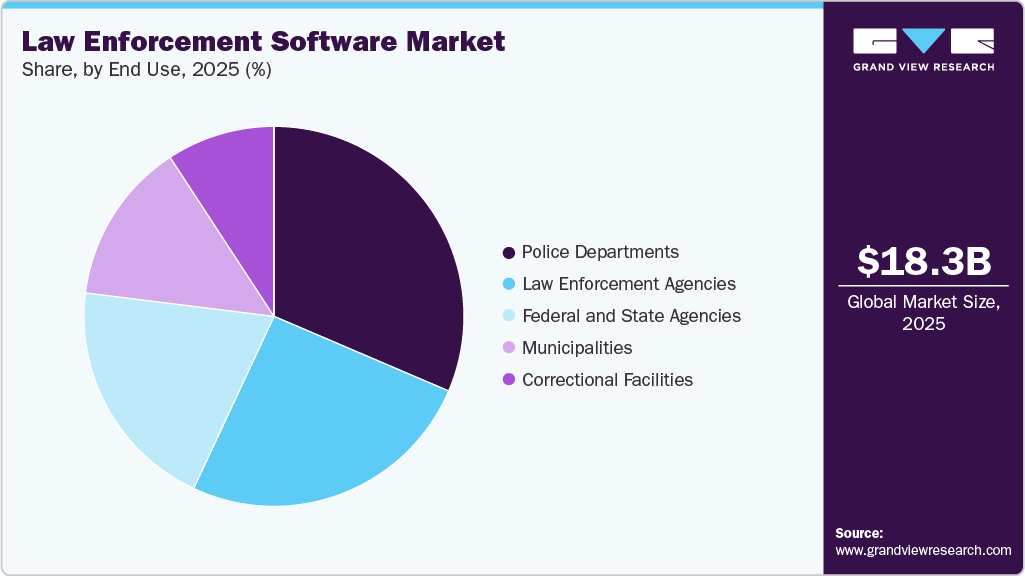
The global law enforcement software market was valued at USD 18.26 billion in 2025 and is expected to reach USD 40.76 billion by 2033, registering a CAGR of 10.4% during the forecast period from 2026 to 2033. Market expansion is primarily driven by the growing demand for advanced digital solutions that enhance public safety, optimize criminal investigations, and improve overall operational efficiency within law enforcement agencies.

Increasing crime rates, the rising adoption of digital evidence management systems, and the integration of artificial intelligence (AI), advanced analytics, and cloud technologies are significantly accelerating market growth. As criminal activities become more complex and technology-driven, law enforcement agencies are increasingly deploying sophisticated software solutions such as records management systems (RMS), computer-aided dispatch (CAD), and digital evidence management platforms. These tools help improve data accuracy, enable real-time decision-making, and streamline workflows. For example, in October 2025, West Midlands Police in the UK advanced its digital transformation by integrating secure AI capabilities through Android Enterprise devices. This initiative replaced traditional, time-intensive processes with AI-driven guidance and real-time access to police records, allowing officers to reduce administrative tasks and focus more on community engagement and public safety.

Law Enforcement Software Market Share

Government investments in modernizing public safety infrastructure through smart policing initiatives are further contributing to market growth. In March 2024, the Port Authority Police Department of New York and New Jersey launched a USD 15 million modernization program aimed at upgrading law enforcement technologies. The initiative included the deployment of data analytics platforms for crime insights, mobile-first reporting solutions, and improved dispatch systems to enhance response efficiency. Additionally, the increasing adoption of cloud-based and AI-driven analytics solutions is enabling predictive policing, faster incident response, and improved threat detection, thereby supporting industry expansion. AI, big data analytics, and IoT technologies are increasingly used to process large datasets, identify crime patterns, and anticipate potential risks, particularly in North America and Europe, where digital policing reforms are strongly emphasized.

Furthermore, growing public safety concerns driven by rapid urbanization and rising geopolitical tensions have intensified demand for real-time surveillance and crime analysis tools. The shift toward interoperable and scalable software platforms enables secure intelligence sharing across jurisdictions, strengthening collaboration and crime-solving capabilities. At the same time, private sector involvement in developing advanced cybersecurity and data protection solutions ensures compliance with stringent data privacy regulations, further reinforcing market growth.

Order a free sample PDF of the Law Enforcement Software Market Intelligence Study, published by Grand View Research.

Key Market Trends & Insights

  • Regional Insights: North America accounted for the largest revenue share of 34.1% in 2025, driven by early adoption of advanced technologies such as AI, predictive analytics, and biometrics. Strong government funding and efforts to enhance interoperability among federal, state, and local agencies continue to support market dominance. Rising cybercrime and the need for digital evidence management have further boosted adoption.
  • Component Insights: The solutions segment led the market with a 67.0% revenue share in 2025. This growth is attributed to increasing demand for modular and customizable platforms that integrate case management, incident tracking, and digital forensics into a unified system, reducing administrative complexity.
  • Deployment Insights: Cloud-based deployments dominated the market in 2025 due to their scalability, flexibility, and cost efficiency. Cloud solutions allow agencies to securely store and analyze large volumes of data, including video evidence and incident reports, while supporting inter-agency collaboration. Hybrid and multi-cloud models are also gaining traction.
  • End-Use Insights: The municipalities segment is projected to grow at the fastest CAGR from 2026 to 2033, supported by smart city initiatives and the need for integrated public safety management systems that enhance coordination, situational awareness, and emergency response.

Market Size & Forecast

  • 2025 Market Size: USD 18.26 Billion
  • 2033 Projected Market Size: USD 40.76 Billion
  • CAGR (2026-2033): 10.4%
  • North America: Largest Market in 2025
  • Asia Pacific: Fastest Growing Market

Key Companies & Market Share Insights

Major players in the law enforcement software market include Tyler Technologies, Axon Enterprise, Hexagon, Wolters Kluwer N.V., Datamaran, and OneTrust, LLC. These companies are actively pursuing strategies such as product innovation, partnerships, collaborations, and agreements to strengthen their market positions. Notable developments include:

  • October 2025: Axon Enterprise, Inc. enhanced its public safety ecosystem with AI-powered and real-time capabilities, integrating 911 intelligence, community collaboration, and officer connectivity through solutions such as Axon Assistant and Axon Air Drone as First Responder.
  • September 2025: TRULEO expanded its AI Analyst tool to support police leadership by automating reporting, compliance documentation, and records management, while enabling performance tracking and crime analysis through advanced data visualizations.
  • February 2025: Flock Safety launched Flock Nova and FreeForm, two AI-driven tools designed to accelerate investigations. Flock Nova consolidates data from multiple sources, including CAD, RMS, and open-source intelligence, into a unified platform and supports secure inter-agency data sharing.

Key Players

  • Axon Enterprise, Inc.
  • Datamaran
  • EcoVadis
  • FactSet
  • Hexagon
  • LSEG
  • NAVEX Global, Inc.
  • NEC Corporation
  • TRULEO
  • OneTrust, LLC.
  • SAS Institute Inc.
  • Sustainalytics
  • Tyler Technologies, Inc.
  • Verisk Analytics, Inc.
  • Wolters Kluwer N.V.

Explore Horizon Databook – The world's most expansive market intelligence platform developed by Grand View Research.

Conclusion

The global law enforcement software market is poised for robust growth through 2033, driven by rising crime complexity, increased government investments, and rapid technological advancements in AI, cloud computing, and data analytics. As agencies worldwide prioritize digital transformation, interoperable platforms, and data-driven policing, demand for comprehensive and scalable software solutions will continue to rise. With strong momentum in North America and accelerating adoption in Asia Pacific, the market is expected to play a critical role in shaping the future of public safety, enabling more efficient, transparent, and proactive law enforcement operations globally.

Knife Market 2033: Cutting Through the Trends

The global knife market was valued at USD 4,482.3 million in 2024 and is forecast to reach USD 7,790.2 million by 2033, registering a CAGR of 6.4% from 2025 to 2033. Growth in the market is largely supported by the expanding number of restaurants and food service establishments across major regions, which continues to increase demand for professional and household knives.

The widening range of knife applications, along with the availability of specialized knives designed for different uses, is further contributing to market expansion. The construction sector, in particular, makes extensive use of retractable and folding knives, and ongoing growth in construction activities is expected to positively influence market demand. In the culinary sector, the growing emphasis on food presentation and visual aesthetics is driving the demand for high-quality kitchen knives. Techniques such as brunoise, chiffonade, julienne, and macedoine cuts have become increasingly popular worldwide, encouraging the use of specialized blades. Additionally, the introduction of technologically advanced knives featuring varied blade designs is expected to support market growth throughout the forecast period.

Knife market size and growth forecast (2023-2033)

Rising interest in outdoor recreation, especially camping, is also boosting demand for specialized knives. Commonly used knives in such settings include dagger knives, Swiss Army knives, and pocket knives. Campers often prefer knives made from high-carbon stainless steel due to their durability, lightweight design, secure grip handles, and protective sheaths. Platforms such as The Dyrt, a popular camping application and information source, highlight the growing popularity of camping activities.

According to a camping report published by The Dyrt in 2022, more than 66 million people participated in camping activities in the United States in 2021, with over 8.3 million individuals camping for the first time. During this period, a camper accessed The Dyrt every second, reflecting heightened engagement in outdoor activities. As camping participation increases, demand for related equipment—including camping knives used for food preparation, fire building, and shelter construction—is also rising, thereby supporting knife market growth over the forecast period.

Order a free sample PDF of the Knife Market Intelligence Study, published by Grand View Research.

Key Market Trends & Insights

  • Regional Insights: Europe accounted for the largest market share of 32.76% in 2024. Growth in outdoor activities such as camping and hiking is positively influencing knife demand across the region. In countries like Germany, increasing urbanization and rising investments in home renovation projects are driving demand for utility and household knives. Additional growth factors include higher household spending on cookware and cutlery, a strong hospitality industry, and a stay-at-home culture that has encouraged consumers to invest in kitchen essentials.
  • Type Insights: The fixed-blade segment dominated the market with a revenue share of 50.66% in 2024. Fixed-blade knives are favored for their strength and durability, making them suitable for demanding outdoor activities such as hunting and wood cutting. They are also widely used in food preparation and as cutlery knives. The growing number of restaurants, increasing dining-out trends, and rising household consumption are key drivers supporting this segment.
  • Size Insights: Knives measuring between 6 and 9 inches held the largest market share of 49.27% in 2024. This size range is widely preferred due to its versatility for slicing, chopping, and dicing, making it popular among both home cooks and professional chefs. Increased interest in home cooking and gourmet food preparation, along with strong influence from culinary content on social media platforms, has further driven demand for medium-sized knives.
  • Application Insights: Kitchen knives accounted for the largest application share of 46.24% in 2024. Expansion of the global restaurant industry remains a major factor driving demand. Additionally, rising household knife consumption driven by population growth and increased home cooking activities continues to support this segment.
  • Distribution Channel Insights: Supermarkets and hypermarkets accounted for 38.06% of industry revenue in 2024. These channels provide wide product visibility, in-store comparison opportunities, and promotional pricing, which contribute to high-volume sales. They remain especially important in emerging economies, where offline retail continues to play a dominant role in consumer purchasing decisions.
  • Material Insights: Steel-based knives held a revenue share of 60.72% in 2024. Stainless steel knives are increasingly replacing carbon steel due to their affordability, availability, and resistance to corrosion. Manufacturers are expanding stainless steel knife production to meet growing demand. Additionally, Damascus steel knives—known for their strength and sharpness—are gaining popularity, further contributing to market growth.

Market Size & Forecast

  • 2024 Market Size: USD 4,482.3 Million
  • 2033 Projected Market Size: USD 7,790.2 Million
  • CAGR (2025-2033): 6.4%
  • Europe: Largest market in 2024
  • Asia Pacific: Fastest growing market

Key Companies & Market Share Insights

The global knife market is fragmented, with the presence of both internationally established brands and regional manufacturers. Key players include Victorinox AG, Ed. Wüsthof Dreizackwerk KG, Zwilling J.A. Henckels AG, Yoshikin Global Corporation, Kai Corporation, MAC Knife, Inc., and others. Leading companies focus on premium offerings, product innovation, and durability to attract quality-conscious consumers.

  • Victorinox AG, founded in 1884 and headquartered in Switzerland, is globally recognized for its Swiss Army knives and has expanded into kitchen cutlery and other lifestyle products. The company produces over 120,000 knives daily and exports to more than 120 countries, emphasizing multifunctionality, precision engineering, and sustainable manufacturing practices.
  • Wüsthof Dreizackwerk KG, established in 1814 and based in Solingen, Germany, is known for its forged kitchen knives, including the Classic and Ikon product lines. The company employs advanced robotics and laser-controlled sharpening technologies to ensure product consistency and durability, with distribution spanning over 80 countries.

Key Players

  • Victorinox AG
  • Ed. Wüsthof Dreizackwerk KG
  • Zwilling J.A. Henckels AG
  • Yoshikin Global Corporation
  • Kai Corporation
  • MAC Knife, Inc.
  • Dalstrong Inc.
  • Cutco Corporation
  • Mercer Tool Corp.
  • Dexter-Russell, Inc.

Explore Horizon Databook – The world's most expansive market intelligence platform developed by Grand View Research.

Conclusion

The global knife market is set to experience steady growth, supported by expanding food service industries, rising outdoor recreational activities, and increasing household demand for high-quality kitchen tools. With the market expected to grow from USD 4,482.3 million in 2024 to USD 7,790.2 million by 2033 at a CAGR of 6.4%, innovation in materials, blade design, and application-specific knives will remain key growth drivers. As consumer preferences continue to evolve toward durability, versatility, and performance, the knife industry is well positioned to sustain long-term growth across both professional and consumer segments.

IT Operations Analytics Market: Navigating the Future of Tech

The global IT operations analytics (ITOA) market was valued at USD 12.52 billion in 2023 and is expected to reach USD 58.23 billion by 2030, expanding at a CAGR of 25.3% from 2024 to 2030. The increasing pace of digital transformation across industries is a key driver of ITOA adoption. As organizations continue to digitize business processes, the need for advanced analytics solutions to ensure the performance, reliability, and availability of IT services has become increasingly critical.

ITOA solutions address these needs by delivering real-time monitoring, sophisticated data analytics, and predictive maintenance capabilities that help minimize system downtime and improve end-user experience. These tools also support the growing shift toward automation in IT operations by enabling smarter resource utilization and reducing dependence on manual intervention. As a result, organizations benefit from lower operational costs, enhanced agility, and improved service delivery, positioning ITOA as a foundational element of modern IT management strategies.

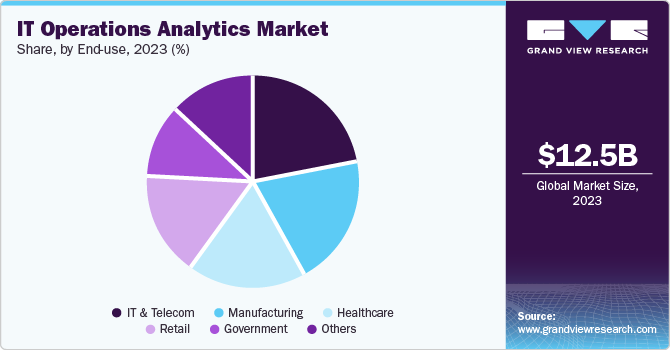
IT Operations Analytics Market Share, By End Use, 2023 (%)

The growing adoption of DevOps and agile methodologies is further accelerating demand for ITOA solutions. As enterprises aim to shorten software development and deployment cycles, continuous monitoring and rapid feedback mechanisms have become essential. ITOA enables DevOps teams to gain real-time operational insights, quickly identify performance bottlenecks, and resolve issues with minimal disruption. By providing visibility across the entire application lifecycle, ITOA strengthens collaboration between development and operations teams, leading to faster releases and more reliable software delivery.

In addition, the rising complexity and frequency of cybersecurity threats is significantly contributing to ITOA market growth. Organizations are increasingly required to detect and respond to security incidents in real time. ITOA platforms offer comprehensive visibility into IT environments, helping identify abnormal behavior, vulnerabilities, and potential security breaches as they occur. When integrated with security information and event management (SIEM) systems, ITOA solutions enhance threat detection and response capabilities, reduce the likelihood of data breaches, and support compliance with regulatory standards.

Order a free sample PDF of the IT Operations Analytics Market Intelligence Study, published by Grand View Research.

Key Market Trends & Insights

  • Regional Insights: North America accounted for the largest revenue share of 38.6% in 2023. Rapid digital transformation and widespread cloud adoption across the region are driving market growth. Organizations operating complex IT infrastructures increasingly rely on advanced analytics to optimize performance, maintain system reliability, and lower operational costs. The strong focus on cybersecurity, regulatory compliance, and proactive IT risk management further supports the widespread adoption of ITOA solutions in North America.
  • Type Insights: The predictive analytics segment led the market with a revenue share of 36.4% in 2023. Predictive analytics enables organizations to forecast potential system issues before they escalate, helping reduce downtime and improve IT reliability. As IT environments become more complex and data volumes continue to grow, predictive analytics powered by machine learning has become more accurate and widely adopted across industries.
  • Application Insights: The network management segment generated the largest revenue share in 2023. Increasing data traffic, expanding numbers of connected devices, and growing reliance on digital infrastructure are driving demand for advanced network analytics. Technologies such as IoT, artificial intelligence, and 5G further increase network complexity, making analytics-driven network management a critical component of IT operations.
  • Deployment Insights: Cloud-based deployment accounted for the largest market share in 2023. Cloud ITOA platforms allow organizations to process large volumes of operational data without major capital investments in infrastructure. These platforms offer enhanced scalability, accessibility, and integration with other cloud services, making them well suited for remote and distributed work environments. The ability to leverage AI and machine learning within cloud platforms further accelerates adoption.
  • End-Use Insights: The IT and telecommunications sector dominated the market in 2023. Telecom operators and IT service providers increasingly depend on ITOA solutions to monitor network performance, proactively resolve issues, and optimize resource usage. The rollout of 5G networks and continued digital transformation initiatives are intensifying the need for advanced analytics to maintain service quality and operational efficiency.

Market Size & Forecast

  • 2023 Market Size: USD 12.52 Billion
  • 2030 Projected Market Size: USD 58.23 Billion
  • CAGR (2024-2030): 25.3%
  • North America: Largest market in 2023
  • Asia Pacific: Fastest growing market

Key Companies & Market Share Insights

Prominent players in the ITOA market include BMC Software, Inc.; ExtraHop Networks, Inc.; Glassbeam Inc.; Hewlett Packard Enterprise Development LP; IBM Corporation; Microsoft; and others. These companies offer comprehensive analytics platforms that leverage artificial intelligence and machine learning to improve IT visibility, automate operations, and enhance system performance.

IBM provides a broad portfolio of ITOA solutions such as Instana for real-time application performance monitoring, Watson AIOps for AI-driven automation, and Cloud Pak for Watson AIOps to prevent outages and optimize performance. Additional offerings like IBM Tivoli Monitoring and IBM Netcool Operations Insight strengthen monitoring and event management capabilities. Microsoft delivers ITOA solutions through platforms such as Azure Monitor and Azure Log Analytics, enabling full-stack monitoring, advanced analytics, and actionable insights across applications and infrastructure.

Key Players

  • BMC Software, Inc.
  • ExtraHop Networks, Inc.
  • Glassbeam Inc.
  • Hewlett Packard Enterprise Development LP
  • IBM Corporation
  • Microsoft
  • Oracle
  • SAP SE
  • Splunk Inc.
  • Broadcom

Explore Horizon Databook – The world's most expansive market intelligence platform developed by Grand View Research.

Conclusion

The IT operations analytics market is poised for substantial growth, driven by accelerating digital transformation, the adoption of DevOps practices, increasing cloud deployments, and heightened cybersecurity concerns. With the market projected to grow from USD 12.52 billion in 2023 to USD 58.23 billion by 2030 at a CAGR of 25.3%, ITOA is becoming indispensable for managing complex IT environments. As organizations seek greater automation, predictive capabilities, and real-time visibility, ITOA solutions will continue to play a critical role in improving operational efficiency, resilience, and overall business performance.

Intrusion Detection and Prevention Systems Market: Safeguarding Your Digital Frontier

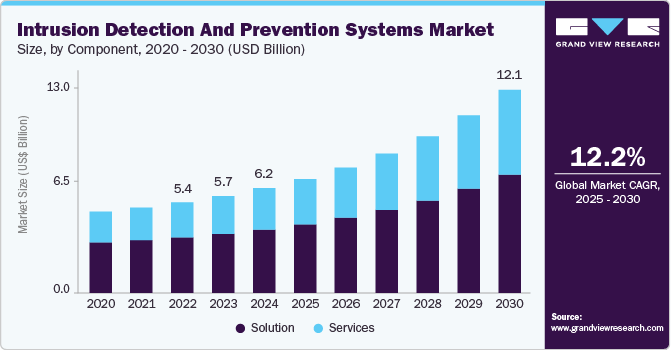
The global intrusion detection and prevention systems (IDPS) market was valued at USD 6.25 billion in 2024 and is expected to reach USD 12.14 billion by 2030, registering a CAGR of 12.2% from 2025 to 2030. Market growth is primarily driven by the increasing adoption of artificial intelligence (AI) and machine learning (ML) technologies, which enable real-time threat detection, faster response, and more proactive cybersecurity strategies.

A major factor supporting market expansion is the rising frequency and sophistication of cyberattacks, including data breaches, ransomware, and Distributed Denial of Service (DDoS) attacks. As organizations continue their digital transformation journeys, protecting networks, endpoints, and sensitive data has become a critical challenge. In addition, regulatory standards such as GDPR, HIPAA, and PCI-DSS are enforcing stricter cybersecurity requirements, encouraging organizations to deploy real-time intrusion detection and prevention solutions to ensure compliance and reduce risk.

Global intrusion detection and prevention systems market size was valued at USD 6.25 billion in 2024 and is projected to grow at 12.2% CAGR to reach USD 12.14 billion by 2030.

The growing adoption of cloud computing is another significant trend shaping the IDPS market. As enterprises migrate applications and workloads to cloud environments, new security vulnerabilities emerge, requiring IDPS solutions that can effectively protect cloud-based and hybrid infrastructures. Scalable solutions capable of operating across hybrid and multi-cloud environments are increasingly in demand. Moreover, the rapid expansion of Internet of Things (IoT) devices has increased network complexity and expanded the attack surface, further intensifying the need for advanced intrusion detection and prevention mechanisms.

The increasing reliance on managed security services is also accelerating market growth. Managed services allow organizations—particularly small and medium-sized enterprises (SMEs)—to access comprehensive IDPS capabilities through subscription-based models without large upfront investments in infrastructure or specialized personnel. These services provide benefits such as continuous monitoring, scalability, and expert incident response. At the same time, advancements in AI and ML are enhancing IDPS performance by improving real-time threat identification, minimizing false positives, and adapting to evolving attack techniques. The adoption of Zero Trust Architecture further emphasizes the importance of IDPS, as these systems function as continuous enforcement layers that monitor and validate traffic, users, devices, and workloads across the network.

Order a free sample PDF of the Intrusion Detection And Prevention Systems Market Intelligence Study, published by Grand View Research.

Key Market Trends & Insights

  • Regional Insights: North America accounted for over 35% of the global IDPS market share in 2024. The region has experienced a surge in ransomware and Advanced Persistent Threat (APT) attacks targeting sectors such as critical infrastructure, finance, and healthcare. The increasing use of double extortion tactics has accelerated demand for automated intrusion prevention solutions. Initiatives led by the U.S. Cybersecurity & Infrastructure Security Agency (CISA), including real-time threat intelligence sharing, are strengthening national cybersecurity defenses. As a result, organizations are increasingly transitioning from signature-based detection methods to behavior-driven IDPS solutions to improve accuracy and response times.
  • Component Insights: The solution segment dominated the market, accounting for over 60% of revenue in 2024. AI-enabled IDPS solutions are gaining widespread adoption due to their ability to analyze network behavior in real time and identify advanced threats that bypass traditional security tools. Rising incidents of ransomware and APTs are driving demand for solutions that offer automated threat response. Additionally, cloud-based IDPS solutions are gaining momentum due to their scalability and compatibility with hybrid IT environments. Regulatory compliance requirements such as GDPR and CCPA continue to support demand for advanced intrusion prevention solutions.
  • Type Insights: The network-based segment held the largest revenue share in 2024. The expansion of hybrid and multi-cloud infrastructures is increasing demand for network-based IDS/IPS solutions capable of monitoring complex environments. With the rise of remote work, organizations are securing VPN and SD-WAN connections using network-based intrusion prevention technologies. AI-powered behavioral analytics are further enhancing anomaly detection and proactive threat identification.
  • Technology Insights: The hybrid IDS segment is expected to grow at a significant rate during the forecast period. Organizations are adopting hybrid IDS solutions to address security challenges across hybrid cloud environments. These systems provide real-time behavioral analysis across multiple attack vectors and can scale dynamically in response to fluctuating network traffic. Integration with Security Orchestration, Automation, and Response (SOAR) platforms is also improving automated threat remediation.
  • Deployment Insights: The on-premises segment accounted for the largest market share in 2024. Despite increasing cloud adoption, many organizations—particularly those handling sensitive data such as government agencies and financial institutions—continue to prefer on-premises IDPS solutions for enhanced control and data sovereignty. The incorporation of AI and ML into on-premises systems is improving threat detection accuracy and reducing false positives while maintaining low latency.
  • Organization Size Insights: Large enterprises dominated the market in 2024, driven by their need to combat complex and sophisticated cyber threats. These organizations are increasingly integrating IDS/IPS with extended detection and response (XDR) platforms to enhance visibility across enterprise environments. Compliance with international cybersecurity frameworks such as ISO 27001 and NIST further supports adoption among large enterprises.
  • Vertical Insights: The BFSI sector accounted for over 25% of total market revenue in 2024. Financial institutions are deploying AI-driven IDPS solutions to address increasing cyber fraud, phishing attacks, and insider threats. Regulatory mandates such as PCI DSS and GDPR are reinforcing the need for advanced intrusion detection capabilities. The growth of digital banking services is also driving demand for cloud-based IDPS solutions to secure online financial transactions.

Market Size & Forecast

  • 2024 Market Size: USD 6.25 Billion
  • 2030 Projected Market Size: USD 12.14 Billion
  • CAGR (2025-2030): 12.2%
  • North America: Largest market in 2024

Key Companies & Market Share Insights

Leading companies in the intrusion detection and prevention systems market are implementing strategies such as partnerships, geographic expansion, and product innovation to strengthen their market presence. These initiatives aim to broaden product portfolios, enhance technological capabilities, and address evolving cybersecurity challenges across industries.

Key Players

  • Allegion plc
  • ASSA ABLOY
  • BAE System
  • Cisco System, Inc.
  • Fortinet, Inc
  • IBM Corporation
  • Palo Alto Networks
  • Robert Bosch GmbH
  • Secureworks, Inc.
  • Sophos Ltd

Explore Horizon Databook – The world's most expansive market intelligence platform developed by Grand View Research.

Conclusion

The intrusion detection and prevention systems market is poised for strong growth, supported by rising cyber threats, regulatory pressures, and the increasing adoption of cloud, IoT, and Zero Trust security models. With the market projected to reach USD 12.14 billion by 2030 at a CAGR of 12.2%, IDPS solutions are becoming an essential component of modern cybersecurity frameworks. Continued advancements in AI, machine learning, and managed security services will further enhance detection accuracy, automation, and scalability, positioning IDPS as a critical defense layer for organizations across all major industries.

Internet Data Center Market 2030: The Future of Digital Infrastructure

The global internet data center (IDC) market was valued at USD 48.70 billion in 2022 and is expected to reach USD 107.26 billion by 2030, expanding at a CAGR of 10.6% between 2023 and 2030. The rapid increase in data generation and processing is driven by the widespread adoption of connected devices, the Internet of Things (IoT), and enterprise-level digital transformation initiatives.

Internet data centers continuously monitor critical parameters such as insulation resistance, leakage current, and partial discharge activity. By detecting early indicators of insulation degradation, insulation monitoring devices (IMDs) support proactive maintenance and preventive actions, thereby reducing the risk of equipment damage, power interruptions, and fire-related hazards.

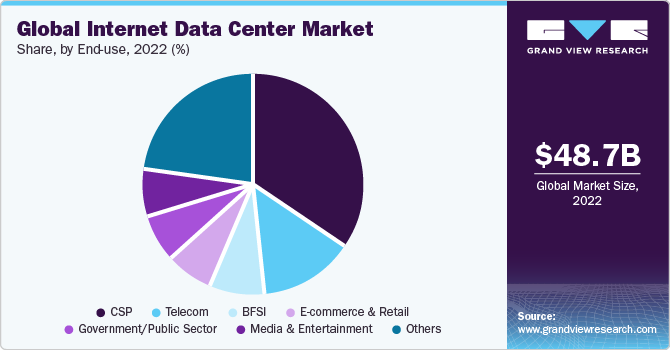
Global Internet Data Center Market share and size, 2022

Demand for IDC services from cloud service providers (CSPs) continues to rise as organizations increasingly migrate their IT workloads to cloud environments. This shift has significantly accelerated investments in data center infrastructure. Geographic distribution has also become a crucial factor in IDC market growth. The expansion of edge computing—where data processing is performed closer to the data source—has gained momentum to minimize latency and support real-time applications. Additionally, strict data protection regulations, disaster recovery requirements, and business continuity planning have compelled enterprises to invest in high-quality IDC facilities. These centers provide robust security, redundancy, and reliable power and cooling systems, enabling uninterrupted operation of critical IT workloads.

As real-time and latency-sensitive data processing requirements increase, organizations are increasingly deploying edge computing solutions that position data centers nearer to data generation points. Edge data centers operated by IDCs enhance response times and support advanced applications such as IoT, autonomous vehicles, and augmented reality. This shift toward edge computing has introduced new growth opportunities and operational demands within the IDC market. Nonetheless, the continued expansion of cloud services remains the primary driver of IDC market growth, with CSPs consistently scaling their data center capacities to meet growing demand for cloud-based solutions.

Order a free sample PDF of the Internet Data Center Market Intelligence Study, published by Grand View Research.

Key Market Trends & Insights

  • Regional Insights: North America accounted for approximately 39% of the global market share in 2022. The region’s strong economic environment and favorable business ecosystem contribute to market growth. IDC services are widely adopted across industries such as e-commerce, entertainment, finance, and healthcare. North America’s role as a global financial hub further strengthens IDC demand, as financial institutions require secure, compliant, and reliable data storage solutions. The rising adoption of FinTech platforms and online banking services continues to support market expansion.
  • End-Use Insights: The CSP segment generated the largest revenue share, accounting for around 35% in 2022. CSPs play a central role in advancing cloud computing by offering Infrastructure as a Service (IaaS), Platform as a Service (PaaS), and Software as a Service (SaaS). These offerings provide scalable, on-demand, and cost-efficient solutions that rely heavily on IDC infrastructure. The globalization of digital services has prompted CSPs to establish data centers worldwide, enabling efficient service delivery to a broad customer base.
  • Service Insights: Colocation services held the largest share of approximately 45% of the IDC market in 2022. Their growing adoption is largely attributed to cost efficiency. Building and maintaining private data centers requires high capital investment and ongoing operational expenses. Colocation allows enterprises to share infrastructure resources, significantly reducing costs while benefiting from a flexible pay-as-you-use model.
  • Deployment Insights: Public deployment accounted for over 52% of total revenue in 2022. The growing need for scalable and economical cloud solutions has driven this segment’s growth. Leading cloud providers such as Amazon Web Services (AWS), Microsoft Azure, and Google Cloud continue to expand their global data center footprints. Public cloud deployments allow organizations to avoid large upfront infrastructure investments and adjust capacity based on demand.
  • Enterprise Size Insights: Large enterprises represented 83% of total revenue in 2022. These organizations operate data-intensive applications that require advanced computing power, networking, and storage capabilities. IDCs provide the scalability and performance needed to support data analytics, artificial intelligence, and machine learning initiatives. The increasing adoption of big data technologies continues to drive IDC demand among large enterprises.

Market Size & Forecast

  • 2022 Market Size: USD 48.70 Billion
  • 2030 Projected Market Size: USD 107.26 Billion
  • CAGR (2023-2030): 10.6%
  • North America: Largest market in 2022
  • Asia Pacific: Fastest growing market

Key Companies & Market Share Insights

The IDC market is highly competitive, with leading players focusing on innovation and energy efficiency. Companies are investing heavily in research and development to design sustainable and energy-efficient data center solutions while expanding their customer base. For example, in September 2023, Google, Microsoft, Schneider Electric, and Danfoss, in collaboration with the Danish Data Center Industry, launched the Net Zero Innovation Hub for Data Centers in Fredericia, Denmark. This initiative aims to accelerate the transition toward environmentally sustainable data center infrastructure across Europe.

Key Players

  • Alibaba Cloud
  • Amazon Web Services, Inc.
  • AT&T Intellectual Property
  • Lumen Technologies (CenturyLink)
  • China Telecom Americas, Inc.
  • CoreSite
  • CyrusOne
  • Digital Realty
  • Equinix, Inc.
  • Google Cloud
  • IBM
  • Microsoft
  • NTT Communications Corporation
  • Oracle
  • Tencent Cloud

Explore Horizon Databook – The world's most expansive market intelligence platform developed by Grand View Research.

Conclusion

The global internet data center market is experiencing strong and sustained growth, driven by the expansion of cloud computing, rising data volumes, and increasing adoption of edge computing solutions. With a projected market value of USD 107.26 billion by 2030 and a CAGR of 10.6%, IDCs are becoming essential enablers of digital transformation across industries. Regional expansion, technological advancements, and sustainability-focused initiatives are further shaping market dynamics. As enterprises continue to prioritize scalability, security, and efficiency, internet data centers will remain a critical component of the global digital ecosystem.